
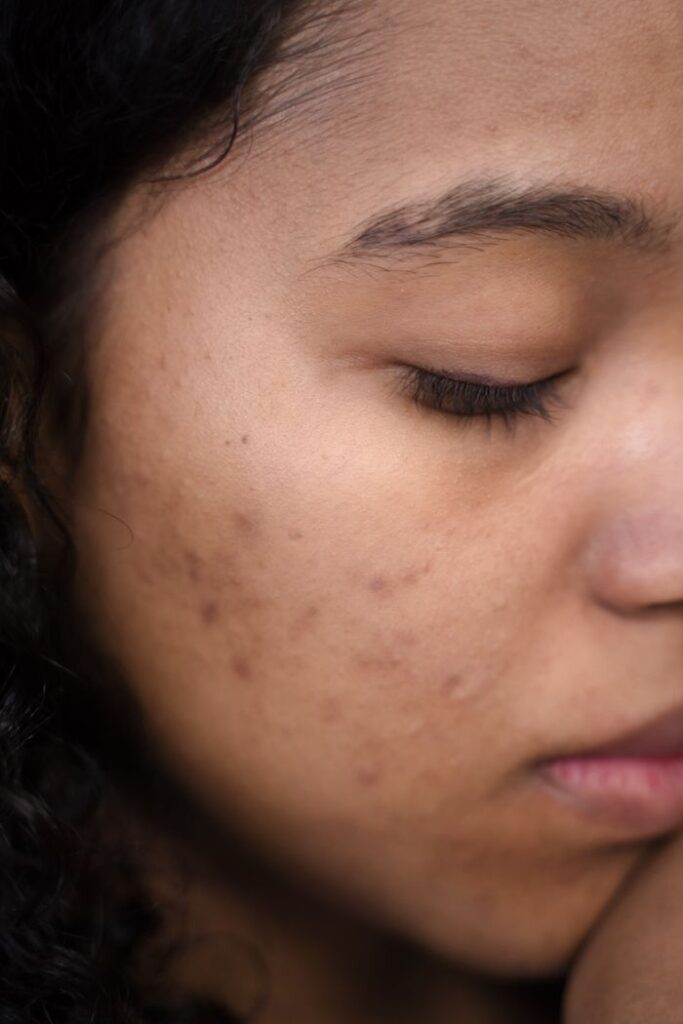
Acne-prone skin behaves differently than skin that stays mostly clear. It reacts fast to the wrong product, holds onto redness longer, and can swing between oily patches and dry, flaky spots in the same week.
That happens because acne isn’t really about dirt sitting on the surface. It comes from clogged pores, extra oil, bacteria, and inflammation all working together underneath the skin, so a routine built for “normal” skin usually falls short here.
Skip the right steps and breakouts tend to stick around longer, leave dark marks behind, and get harder to calm each time they flare up. A routine matched to your actual skin, not a generic five-step list copied from somewhere else, breaks that cycle.
That is exactly what this guide walks through, one piece at a time, so you can build something that actually fits your face.
- Best Skincare Routine for Acne-Prone Skin
- Skincare Routine for Oily Acne-Prone Skin
- Skincare Routine for Dry Acne-Prone Skin
- Skincare Routine for Combination Acne-Prone Skin
- Skincare Routine for Sensitive Acne-Prone Skin
- Is Double Cleansing Good for Acne-Prone Skin
- How to Exfoliate Acne-Prone Skin
- Which Scrub Is Good for Acne-Prone Skin
- Is Vitamin C Good for Acne-Prone Skin
- Is Shea Butter Good for Acne-Prone Skin
- Adapting Your Routine as Your Skin Changes
- FAQs
Best Skincare Routine for Acne-Prone Skin
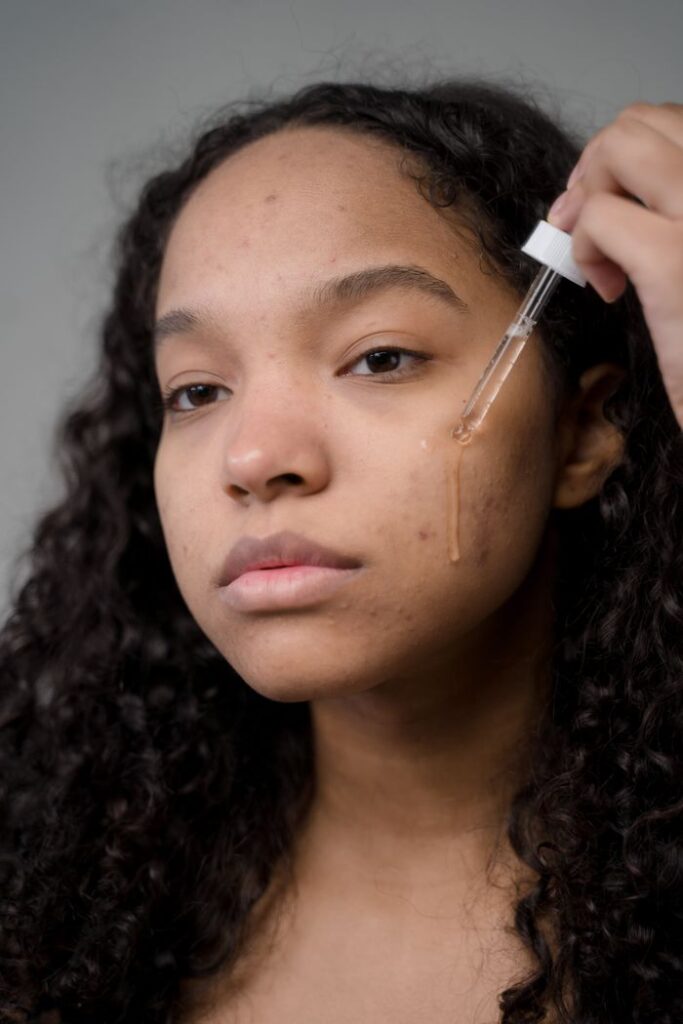
A solid routine for acne-prone skin comes down to four moves, done in order, every single day.
- Cleanse with a gentle, non-stripping wash to clear oil and grime without disturbing the skin barrier.
- Treat with a proven acne ingredient such as salicylic acid, benzoyl peroxide, or a retinoid.
- Moisturize with a lightweight, oil-free formula to keep skin calm and hydrated.
- Protect with a broad-spectrum sunscreen each morning, since treated skin burns more easily.
Order matters. Cleanser goes first to create a clean base, and treatment follows so it can actually sink into skin that’s ready for it.
Moisturizer comes next to soften any dryness the treatment step might cause. Sunscreen always finishes the morning routine, since going without it can undo progress made by active ingredients.
The American Academy of Dermatology’s updated acne management guidelines point to benzoyl peroxide and topical retinoids as the treatments with the strongest evidence behind them. The same update notes that acne touches nearly 50 million people in the country each year, so this routine addresses a problem most people will face at some point.
Consistency beats intensity here. Sticking with these four steps daily, even at gentle strengths, tends to outperform switching products every week in search of a faster fix.
Skincare Routine for Oily Acne-Prone Skin
Oily acne-prone skin needs the same four steps, just built from lighter, oil-controlling versions of each one.
A gel or foaming cleanser works better here than a creamy one, since it lifts excess sebum without leaving a greasy film behind.
For treatment, salicylic acid earns its reputation with this skin type. It dissolves the oil that glues dead cells together inside the pore, which is a major driver of blackheads and stubborn bumps.
Moisturizer still matters, even when skin feels shiny by noon. Choose a gel-based, oil-free option, since skipping moisturizer often makes oily skin overcompensate and produce even more oil.
Finish with a matte or gel sunscreen. A heavy, cream-based SPF tends to sit poorly on oily skin and can contribute to midday shine and clogged pores.
Skincare Routine for Dry Acne-Prone Skin
Dry, acne-prone skin is a tricky combination, since many acne treatments can make dryness worse if the rest of the routine doesn’t support the barrier.
Start with a cream or lotion cleanser instead of a foaming one. Foaming washes often strip natural oils that dry skin can’t afford to lose.
Treatment still belongs in the routine, but frequency should ease off. Using a retinoid or benzoyl peroxide every other night, rather than nightly, gives the barrier room to recover between applications.
Moisturizer plays a bigger role for this skin type. Look for humectants like glycerin or hyaluronic acid paired with a few barrier-supporting oils, since a thin lotion alone often isn’t enough.
Sunscreen should lean hydrating too. A moisturizing, cream-based SPF protects skin without adding to the tightness or flaking that dry, treated skin often deals with.
Skincare Routine for Combination Acne-Prone Skin
Combination skin means an oily T-zone paired with drier cheeks, so the main challenge is treating both zones without over-drying one or under-treating the other.
The cleanse and protect steps can stay the same across the whole face, since a balanced gel cleanser and a lightweight sunscreen suit most combination skin fine.
Treatment is where the split happens. Apply a stronger acne treatment, like a higher-strength salicylic acid, only across the forehead, nose, and chin, and use a gentler version or skip it on the cheeks.
Moisturizer can follow the same zone logic. A slightly richer layer on the cheeks and a lighter gel on the T-zone keeps both areas comfortable without either one feeling neglected.
Skincare Routine for Sensitive Acne-Prone Skin
Sensitive, acne-prone skin reacts to more than just active ingredients. Fragrance, harsh preservatives, and even certain textures can trigger redness and stinging just as easily as a strong treatment can.
Choose a fragrance-free, minimal-ingredient cleanser and moisturizer. Long ingredient lists raise the odds that something in the mix will cause irritation.
Introduce actives slowly. Starting a retinoid or salicylic acid two or three nights a week, instead of nightly, gives sensitive skin time to build tolerance without flaring up.
Patch testing matters more here than for any other skin type. Applying a new product to a small area, like behind the ear, for a few days before using it on the full face catches reactions early.
Mineral sunscreens, built around zinc oxide or titanium dioxide, tend to sit more comfortably on sensitive skin than chemical filters, which can sting compromised skin.
Is Double Cleansing Good for Acne-Prone Skin
Double cleansing means washing twice: once with an oil-based cleanser to dissolve sunscreen, makeup, and excess sebum, then again with a water-based cleanser to clear away whatever’s left.
For acne-prone skin, this method genuinely helps in specific situations. Anyone wearing heavy sunscreen or makeup daily benefits from the oil step, since a single wash often leaves residue behind that can contribute to clogged pores.
It can backfire, though, on skin that’s already dry or sensitive, or on nights when strong actives like retinoids are also in the routine. Two cleansing steps plus a treatment step can push the barrier past what it can handle.
A reasonable middle ground is using it on days with heavy sunscreen or makeup, and switching to a single gentle cleanse on lighter days or nights when treatment products are already doing a lot of work.
How to Exfoliate Acne-Prone Skin
Exfoliation removes the buildup of dead skin cells that can trap oil and bacteria inside a pore, which is why it plays a real role in managing breakouts.
Chemical exfoliants, built around ingredients like salicylic acid or glycolic acid, tend to suit acne-prone skin better than physical scrubs, since they work evenly across the skin instead of relying on manual friction.
Frequency depends heavily on skin type. Oily, resilient skin can often handle a chemical exfoliant three to four times a week, based on guidance from board-certified dermatologists interviewed on the topic of acne-safe exfoliation.
- Oily or thicker skin: three to four times weekly.
- Combination skin: two to three times weekly, focused on the T-zone.
- Dry or sensitive skin: once or twice weekly at most.
Physical exfoliation, when used at all, works best kept to the body rather than the face, since rough granules can tear at already-inflamed acne lesions and worsen redness.
Which Scrub Is Good for Acne-Prone Skin
If physical exfoliation still appeals, the texture of the scrub makes a real difference for acne-prone skin.
Fine, round particles, like rice powder or finely milled oat, glide across skin instead of scraping it, which lowers the risk of tearing open a breakout.
Avoid scrubs built from jagged materials such as crushed shell or fruit pits. Dermatologists commonly point out that these sharp edges can create tiny tears in the skin, which then invite more bacteria and irritation.
Gentler is genuinely better here. A scrub used once a week, alongside a chemical exfoliant used more often, tends to serve acne-prone skin far better than an aggressive scrub used daily.
Is Vitamin C Good for Acne-Prone Skin

Vitamin C isn’t an acne treatment on its own, but it earns a spot in an acne-prone routine for a different reason: fading the dark marks breakouts leave behind.
As an antioxidant, vitamin C helps calm the oxidative stress that inflamed acne lesions generate, and research summarized in the Journal of the American Academy of Dermatology has linked stable, well-formulated L-ascorbic acid to measurable antioxidant activity in skin tissue.
For sensitive or breakout-prone skin specifically, a gentler derivative called sodium ascorbyl phosphate is often the better pick. Clinical research on this form has shown it can reduce inflammatory acne lesions over several weeks while causing less irritation than pure L-ascorbic acid.
Vitamin C itself does not clog pores. When breakouts do follow its use, the more likely cause is a heavy, oil-based formula, not the vitamin C molecule.
Using it alongside a retinoid works fine, as long as the two are split by time of day. Vitamin C in the morning, under sunscreen, and a retinoid at night keeps both ingredients effective without stacking irritation.
Is Shea Butter Good for Acne-Prone Skin
Shea butter carries a reputation as a heavy, pore-clogging ingredient, but the evidence tells a more forgiving story for most acne-prone skin.
On the standard 0 to 5 comedogenic scale, shea butter typically lands at a 0 to 2, which puts it in the low-risk range rather than alongside genuinely pore-clogging oils.
Its fatty acid makeup explains why. Shea butter is rich in linoleic acid, and skin research, including a widely cited 2006 reassessment of comedogenicity published in the same JAAD journal, associates linoleic-heavy ingredients with supporting the skin barrier rather than congesting pores.
That said, texture still matters in practice. Thick, straight shea butter applied heavily to already-oily areas can feel too occlusive, so it tends to work best as a moisturizer for drier patches or as a lighter component blended into a fuller cream.
Adapting Your Routine as Your Skin Changes
Skin type isn’t fixed. Hormones, weather, stress, and even the products already in a routine can shift skin from oily to dry, or from calm to reactive, over the course of a year.
That means the steps covered here (cleansing, treating, exfoliating, moisturizing) aren’t a one-time decision. A routine built for oily summer skin often needs lighter treatment and richer moisture once winter dries things out.
The smartest approach is to check in with your skin every few weeks rather than assuming today’s routine will always be tomorrow’s. If breakouts increase, dryness spikes, or sensitivity shows up out of nowhere, that’s the signal to adjust one step at a time, not overhaul everything at once.
Building a lasting, effective routine for acne-prone skin isn’t about finding one perfect set of products. It’s about staying willing to adjust as skin does what skin naturally does: change.
FAQs
What is the best skincare routine for acne-prone skin?
Cleanse, treat, moisturize, and protect, in that exact order, every day. Cleanser clears the base, treatment targets the acne, moisturizer softens dryness, and sunscreen protects treated skin from sun damage.
Is double cleansing good for acne-prone skin?
Yes, but only in certain situations. It works well on days with heavy sunscreen or makeup, but can over-strip skin that’s already dry, sensitive, or using strong actives like retinoids the same night.
How often should acne-prone skin be exfoliated?
It depends on skin type. Oily skin can handle chemical exfoliation three to four times a week, combination skin two to three times, and dry or sensitive skin just once or twice weekly.
Which scrub is best for acne-prone skin?
Fine, round-particle scrubs like rice powder or finely milled oat are safest, since they glide instead of scraping. Jagged scrubs made from crushed shell or fruit pits should be avoided, as they can tear inflamed skin.
Is vitamin C good for acne-prone skin?
Vitamin C doesn’t treat acne directly, but it helps fade the dark marks breakouts leave behind. Sensitive or breakout-prone skin often does better with a gentler derivative like sodium ascorbyl phosphate.
Is shea butter good for acne-prone skin?
Yes, for most skin types. It ranks low on the comedogenic scale and is rich in linoleic acid, which supports the skin barrier rather than clogging pores, though it works best on drier areas.
Does acne-prone skin need a different routine in every season?
Skin type shifts with hormones, weather, and stress, so a routine needs regular check-ins. If breakouts, dryness, or sensitivity change, adjust one step at a time instead of overhauling everything.