
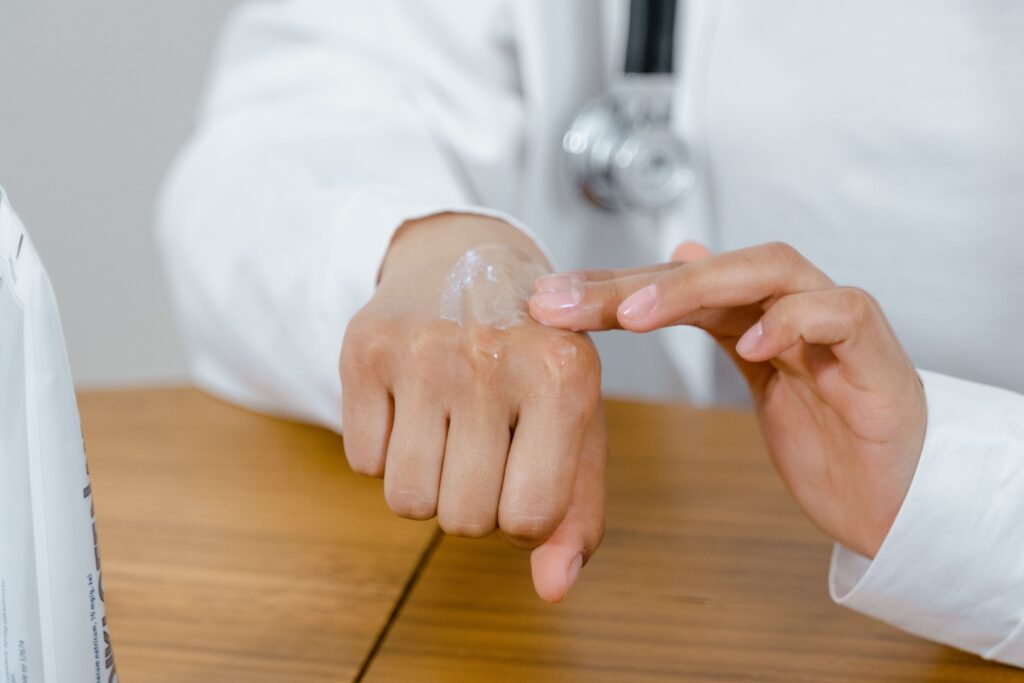
Whether it’s the cold season or everyday chores, dry and cracked hands not only look bad but also hurt. By the way, hand cream is considered the best for severely cracked hands because it is thicker.
But some special hand lotions are very helpful in healing dry skin quickly. If you combine a good daily routine with the right hand lotion and cream, dry, cracked hands will be gone forever.
A good hand lotion should have certain qualities. It should contain glycerin and ceramides to moisturize and heal cracked skin. In addition, shea butter reduces skin irritation.
For daytime use, the lotion needs to be non-sticky so it absorbs quickly. Try to keep the lotion fragrance-free to avoid irritating the hands.
What Does Dry and Cracked Hands Mean?
Dry and cracked hands are not just a cosmetic problem but have a specific pathophysiology in medical science; in medical terms, abnormal dryness of the skin is called xerosis, xeroderma, or asteatosis.
The outermost layer of our skin is called the ‘stratum corneum’. When the water content in this layer decreases, the skin loses its elasticity.
Lipids naturally present in the skin (such as ceramides, cholesterol, and fatty acids) help prevent water loss. The lack of these lipids breaks down the skin’s natural protective barrier.
Cracks and inflammation: When dry hand skin loses elasticity and stretches, it develops deep cracks (fissures) and may become inflamed. If they are not treated in time, they start bleeding and increase the risk of severe infection or severe eczema if bacteria enter.
What is hand lotion?
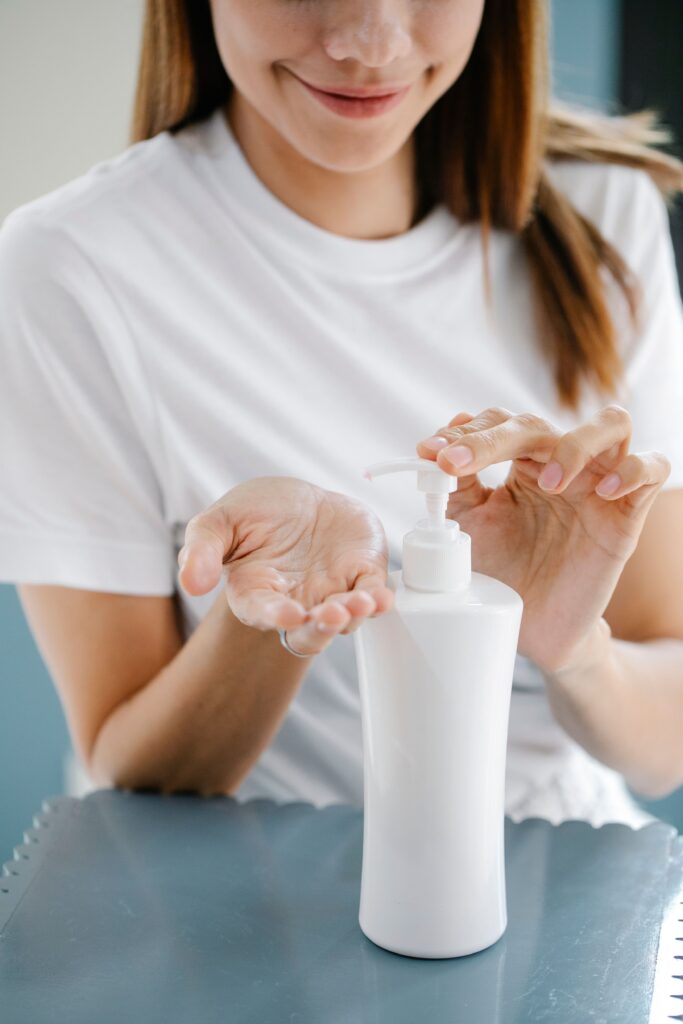
Many people consider hand lotion and body lotion to be the same, but there is a clear difference between their formulations and purposes. Lotion is mainly a mixture of water and a very small amount of oil (Oil-in-Water Emulsion).
It is thin and light and is absorbed immediately upon application to the skin. However, its effect is temporary because the water quickly evaporates into the air. The skin on the back of our hands is thinner than the rest of the body, and there are very few sebaceous glands there.
In addition, hands are constantly exposed to water, soap, and the external environment, causing them to lose their natural oils.
That is why ordinary body lotion is not enough for severe hand dryness. Special hand lotions and hand creams are made thicker and richer in oil so they can penetrate deeper layers of the skin and create a lasting protective moisture barrier.
What is the best hand lotion for dry, cracked hands?
When choosing a lotion for dry, chapped hands, it is important to understand the formulation’s density and ingredient properties. Hand care lotions are divided into two basic types based on their vehicle and density to ensure they are effective both day and night.
Comparison Between Lightweight Lotions and Restorative Lotions
| Feature | Lightweight Lotions | Restorative Lotions |
| Oil-to-Water Ratio | High water content (about 70% to 80%) and low oil content. | High oil and grease content (about 50% to 60%) with a moderate amount of water. |
| Absorption | Absorb into the skin within seconds and leave absolutely no stickiness. | Take some time to absorb and form a protective, moisturizing layer on the skin surface. |
| Texture | Very thin, watery, and has a fluid/runny consistency. | Thick, smooth, dense, and has a good spreadable texture. |
| Best For | Daytime use, after frequent handwashing, and for general/mild dry skin. | Nighttime use, severely dry skin, cracked cuts, and healing deep wounds. |
A good hand lotion should have the following three basic scientific properties and active ingredients:
Humectants: These ingredients draw water from the atmosphere and the skin’s inner layers to the surface, hydrating cells. Look for ingredients like Glycerin, Hyaluronic Acid, and Urea on the lotion label.
Emollients: These ingredients soften rough skin by filling the spaces between cells and restoring its natural elasticity. The lotion should contain ingredients such as Ceramides, Shea Butter, and Jojoba Oil.
Occlusives: These ingredients create an invisible protective layer on the skin to prevent water loss. The lotion needs to contain ingredients such as petrolatum, mineral oil, or dimethicone to lock in moisture.
Furthermore, hand lotions for sensitive and chapped skin must be completely fragrance-free, dye-free, and free of irritants such as alcohol to reduce the risk of allergies or irritation.
Best Lotion for Different Types of Dry, Cracked, and Bleeding Hands
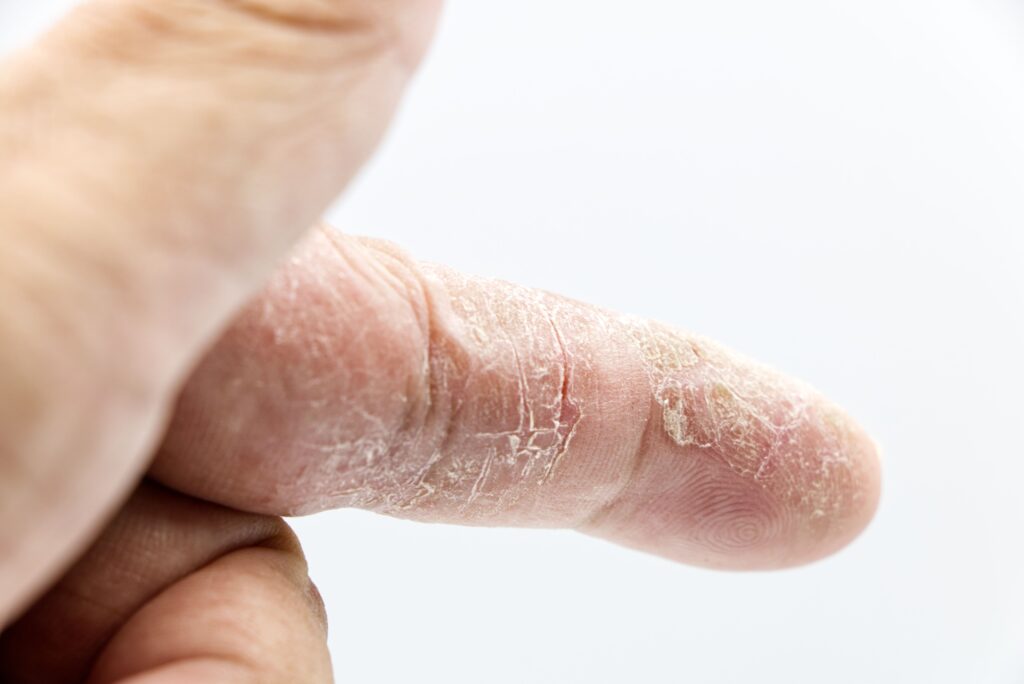
Skin has different types, such as dry, oily, sensitive, and combination. Even within the dry skin category, we can further divide dry hand skin into three types to determine which hand lotion will be best for each.
Normal Dry Hand
Dry hands occur when the skin’s natural oil layer is disrupted by daily activities, frequent soap use, or cold, dry environmental conditions.
In this initial state, the skin feels rough, dull, and slightly itchy, but there are no problems such as deep cuts or bleeding. To remedy this condition, lightweight hand lotions are well-suited, as the skin quickly absorbs them and does not interfere with daily activities.
The main feature of such a lotion should be that it provides moisture without leaving the skin sticky, for which ingredients such as glycerin and dimethicone are considered ideal.
After washing the hands, the skin should be gently patted dry rather than rubbed with a towel to retain some moisture, and hand lotion should be applied immediately afterward, within 3 minutes, because applying lotion to damp skin locks water inside the cells.
Additionally, one should avoid using harsh soaps and always use lukewarm or cool water to wash hands, as hot water quickly removes the skin’s natural oils.
2) Cracked Hand
In the case of dry and cracked hands, the skin’s defense system is weakened. At this stage, special attention should be paid to the properties of the lotion’s ingredients.
The lotion should be free of chemicals such as fragrance, alcohol, and paraffin, as even a slight fragrance can cause severe irritation and inflammation on exposed skin.
For this condition, look for lotions containing colloidal oatmeal, panthenol, and bisabolol, as these ingredients quickly suppress skin inflammation and relieve itching.
3) Extremely Cracked and Bleeding Hand
Severely dry, bleeding hands are a very sensitive condition in which deep wounds and cracks reach the inner layers of the skin, and even the slightest touch can cause bleeding.
In this case, the risk of germs entering and spreading infection increases greatly. At the beginning of treatment, a temporary liquid bandage should be used on bleeding wounds to seal the edges of the cut and prevent germs from entering.
Once the bleeding has stopped, use “Wet Wrap Therapy” to restore deep moisture. In this method, apply a thick layer of unscented Deep Healing Lotion to the affected hands.
Then, slightly moisten cotton gloves in lukewarm water, put them on your hands, and put dry gloves on top of them. Leave these bandages on for two to four hours or overnight.
This moist environment helps the lotion’s ingredients penetrate deeper into the skin and provides immediate relief from pain. If cuts do not heal despite continued use, pus begins to ooze, or swelling increases, consult a dermatologist immediately.