
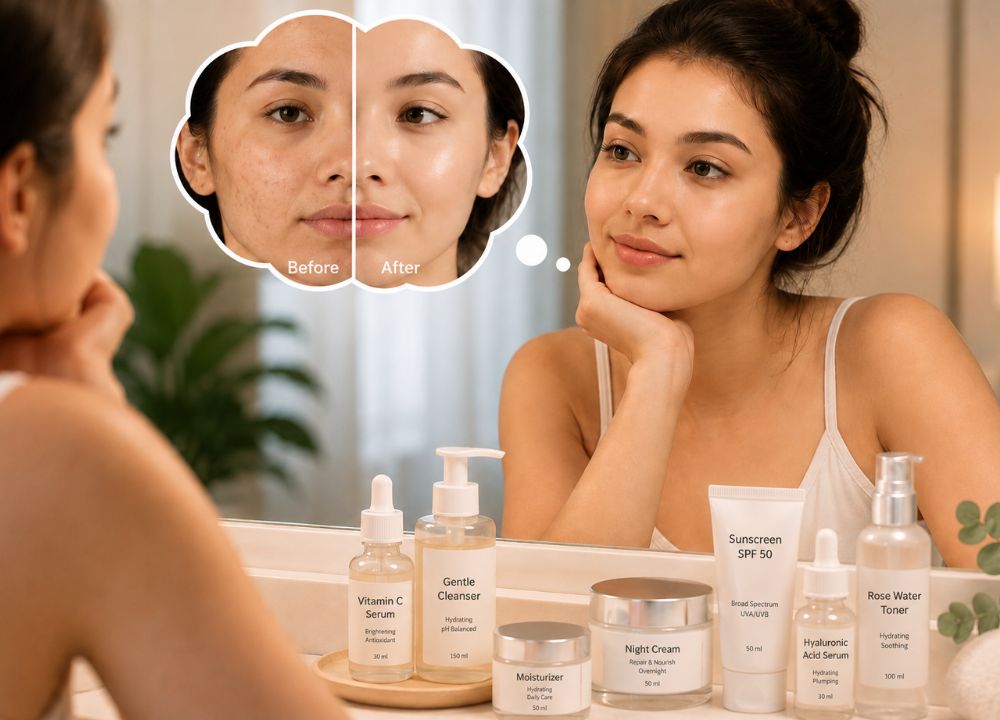
Bumps, uneven skin, and rough areas on the face are more than just cosmetic issues. They affect how your makeup sits, how your skin feels, and, honestly, how confident you feel as you walk out the door. And the aggravating part is that most individuals are continuously changing the product without knowing the actual cause.
This can happen when there is a buildup of dead skin cells, clogged pores, or a weaker skin barrier. NIVEA says textured skin is frequently caused by enlarged pores, acne, or acne scars. It’s not feasible to have absolutely smooth skin, but there are things that can be done to visibly decrease and avoid it. If you ignore it, it only gets worse with time.
An untreated texture may be more difficult to handle. Breakouts occur when pores get clogged, rough patches become drier, and your skin starts to seem drab instead of healthy.
The good news is that addressing textured skin is not hard. It’s all about the appropriate ingredients, a few key behaviors, and knowing what your skin is really working with.
How to Fix Uneven Skin Texture?
Uneven skin texture often means some areas are smooth while others feel rough or raised. There isn’t ever just one thing. It is usually a combination of things like sun exposure, dehydration, acne damage left behind, or just not exfoliating enough.
First, don’t treat your whole face the same. If your T-zone is bumpy from clogged pores, yet your cheeks are dry and rough, you’ll have to treat those two regions differently. “The secret is understanding your skin and customizing a routine that works for your specific skin type and texture concern,” advises board-certified dermatologist Dr. Garshick.
Sunscreen also has a much bigger role than people realize. UV damage breaks down collagen over time, resulting in a rough, uneven facial texture. SPF is one of the most underrated remedies for uneven skin. Use it every day.
Gentle exfoliation helps, too, a couple of times a week. It removes dead skin on the surface, making the texture appear worse than it is.
How To Care For Dry Textured Skin?
Dry textured skin feels both rough and tight at the same time. It’s not just that you’re dry; it means your skin barrier isn’t functioning correctly to hold onto water. If the barrier is weak, the skin will dry up faster, and the surface will start to look and feel flaky and uneven.
Many people with dry textured skin tend to over-exfoliate, thinking it will smooth things out. It generally makes it worse. Your skin needs careful care initially and progressive exfoliating, not violent scrubbing.
What Causes Dry, Textured Skin to Develop?
Common triggers for dry, textured skin include harsh cleansers, long hot showers, cold weather, and skipping moisturizer. Your skin is deprived of its natural moisture; the surface dries out, which causes the rough, bumpy texture you see and feel.
According to Clarins, the main culprits behind rough, bumpy skin texture are dryness and the accumulation of dead skin cells. The best approach to noticeably improve it is by constant hydration along with moderate exfoliation. Hormones, food, and even stress can also affect how dry and rough your skin gets, especially if changes occur rapidly.
What Works for Textured Skin on the Face?
Helping textured skin on the face is about consistency, not discovering a miracle solution. Most people see significant progress when they commit to a simple regimen and stop altering things every week.
Exfoliation is the first step. Instead of physically irritating scrubs, AHAs, and chemical exfoliants dissolve dead skin on the surface. Then hydration seals in the smoothness to prevent your skin from drying out.
Best Ingredients for Textured Skin
Retinol is one of the most proven ingredients for skin texture. It improves the skin’s appearance by reducing the appearance of texture and addressing common skin concerns such as wrinkles, dark spots, and uneven skin tone, making it a must-have in any textured-skin routine. Begin with a low concentration and just use it at night, a few times a week.
Another substance worth utilizing daily is Niacinamide. It improves the skin barrier, locks in moisture to smooth rough, flaky patches, minimizes pore size, and regulates oil production, making it a strong solution for almost all skin types, including acne-prone, dry, and sensitive skin. AHAs such as glycolic or lactic acid also help these by removing the dead skin that rests on the surface and makes the texture worse.
Daily Habits for Improving Skin Texture Over Time
Small everyday behaviors make a bigger difference than any one product. The basics most people skip or rush through are washing your face with a gentle cleanser, applying SPF every morning, and consistently using a moisturizer that’s right for your skin type.
Getting enough sleep, not touching your face during the day, and drinking enough water matter more than people give them credit for. Your skin heals itself overnight, so a proper bedtime routine with a moisturizing moisturizer and a targeted serum is where much of the real improvement happens.
FAQS
Does bumpy skin go back to smooth?
Yes, it can get a lot better with the appropriate routine. It takes time, though , typically two weeks to two months , depending on what is causing it .
Is it OK to exfoliate textured skin every day?
No, over-exfoliating damages your skin barrier and worsens your skin’s texture. Most skin types need only twice or thrice a week.
Does drinking water improve skin texture?
It helps, but it’s not a fix on its own. Hydrating from the inside is important for your skin, but you still need effective topical products and a consistent routine.
Fastest way to get rid of facial texture?
Something like a chemical exfoliator, glycolic acid, or lactic acid, will offer you visible benefits faster than most things. Apply a good moisturizer and niacinamide serum, and you will see a change in two to three weeks.
Does sunscreen help with skin texture?
Yes, UV exposure breaks down collagen and leads to rough, uneven skin over time. Wearing SPF every day helps prevent future damage and allows your skin to heal itself more easily.