
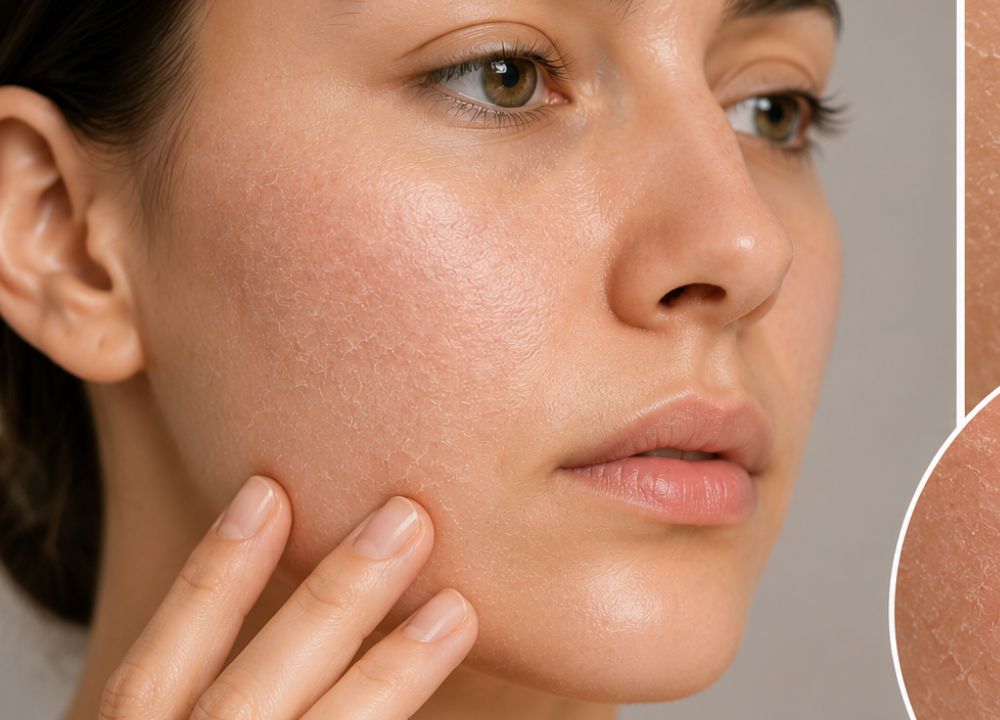
Your skin feels tight and rough, so you reach for a thicker cream. Weeks pass and nothing changes.
That happens because dryness and dehydration are two separate problems. Treating the wrong one wastes time and money, and sometimes makes the real issue worse.
The mix-up is common because both conditions cause flaking, tightness, and a dull look. Underneath, though, one is about oil, and the other is about water.
This guide walks through what sets them apart, how to spot which one you have, and what actually helps each condition heal.
- Dry Skin vs Dehydrated skin
- What is Dry Skin
- What is Dehydrated Skin?
- Key Differences Between Dry and Dehydrated Skin
- Signs and Symptoms of Dry Skin
- Signs and Symptoms of Dehydrated Skin
- How to Tell if Your Skin is Dry or Dehydrated
- Does Dehydration Cause Dry Skin?
- How to Treat Dry Skin
- how to Treat Dehydrated Skin
- Choosing the Right Routine for Your Skin’s Real Need
- FAQS
Dry Skin vs Dehydrated skin
At the core, the split comes down to two different substances your skin can run short on.
Dry skin lacks sebum, the natural oil your glands produce, while dehydrated skin lacks water within the tissue itself. That single distinction changes everything about how each one behaves.
Dry skin counts as a skin type, sitting alongside oily, combination, and sensitive skin. It stays with you long term and shapes how your face reacts to weather, soap, and age.
Dehydrated skin works differently, since it’s a temporary condition rather than a fixed trait. It can show up in anyone, including people whose skin naturally makes plenty of oil.
What is Dry Skin
Dry skin starts with the glands that sit just beneath the surface of your face and body.
These sebaceous glands don’t produce enough sebum, the oil that normally protects and softens your skin. Sebum forms a thin film on top of your skin that keeps moisture locked in.
Without that oil layer, the skin barrier weakens, and water slips out through it more easily. Some people are simply born this way, since sebum output has a strong genetic root.
It also tends to run in families and often lasts a lifetime rather than fading with a season. Cold weather, hot water, and strong cleansers usually push it further out of balance.
What is Dehydrated Skin?
Dehydrated skin has a completely different starting point, since oil isn’t the missing piece here.
The stratum corneum, the outermost layer of skin, normally holds somewhere between 10 and 30 percent water by weight. When that percentage drops, the skin’s surface stops working the way it should.
This water shortfall is a passing condition tied to the outer skin layer, not a trait built into your genes. It can strike regardless of how much oil your glands normally produce.
Even naturally oily or acne-prone skin can end up dehydrated from things like weather shifts, screen glare, or indoor heating and air conditioning. That’s why an oily complexion can still feel tight and parched.
Key Differences Between Dry and Dehydrated Skin

Once you strip away the overlap, three factors separate these conditions cleanly.
| Factor | Dry Skin | Dehydrated Skin |
| What’s missing | Oil (sebum) | Water |
| How long it lasts | Long term, often lifelong | Temporary, comes and goes |
| Who it affects | People with a naturally low-oil skin type | Any skin type, including oily skin |
| Main cause | Genetics, gland activity | Weather, habits, harsh products |
| Response to hydrating serums | Slight, tightness often stays | Fast, often within hours |
Dry skin needs lipid replacement while dehydrated skin needs water replacement, and mixing up the fix rarely brings real relief.
Signs and Symptoms of Dry Skin
Dry skin tends to announce itself in a few consistent ways.
- Rough, flaky patches, especially on cheeks, hands, and shins
- A constant feeling of tightness that doesn’t ease up
- Visible scaling or small cracks in colder months
- Itching that can turn into redness if scratched
- A dull, slightly ashy look on darker skin tones
Dry skin tends to bring on steady tightness no matter the time of day or the weather outside. That constancy is one of its clearest calling cards.
Signs and Symptoms of Dehydrated Skin
Dehydrated skin shows up differently, and the signs tend to shift depending on the day.
- Dullness, even after a full night of sleep
- Fine lines that look deeper than usual, especially around the eyes
- A tight feeling right after cleansing that fades a bit later
- Skin that looks oily in some spots yet feels parched in others
- A slightly sunken, tired appearance without visible flaking
Unlike dry skin, dehydrated skin tends to show fluctuating signs, with tightness mostly showing up after washing or after time in cold, dry air. That back-and-forth pattern is the giveaway.
How to Tell if Your Skin is Dry or Dehydrated
A quick, physical test can settle the question in under a minute.
Gently pinch the skin on your cheek and watch what happens next. If it wrinkles under light pressure instead of springing back into place, your skin is running low on water.
For a second check, try a split-face trial before bed one night. Smooth a hydrating serum onto only one side of your face and wait fifteen minutes before comparing both sides.
If that treated side looks noticeably plumper and smoother, with fine lines softening, dehydration is likely the main issue. If the treated side only feels a touch smoother while tightness lingers, dryness is more likely driving things.
Pay attention, too, to how your skin behaves across the year. People with true dry skin often notice symptoms year-round, even while drinking enough water and using hydrating products. That steadiness points toward a skin type rather than a passing dip in moisture.
Does Dehydration Cause Dry Skin?
The two conditions aren’t sealed off from each other, and they often feed into one another over time.
Because oil and water play separate roles in skin health, ongoing dehydration and true dryness usually call for different fixes. Still, one can quietly worsen the other.
When skin lacks oil, it struggles to hold onto water, which can drag it into dehydration on top of dryness. That overlap explains why so many people end up dealing with both at once.
So dehydration doesn’t create dry skin as a permanent type on its own. It can, however, sit on top of existing dryness and make the whole picture feel far worse than either issue would alone.
How to Treat Dry Skin
Since dry skin comes from a shortage of oil, treatment centers on replacing lipids rather than chasing water.
Dermatology providers generally focus on restoring the skin barrier and tackling the root cause behind the low oil output. That means richer, oil-based products rather than light, watery ones.
The American Academy of Dermatology suggests reaching for a cream or ointment built with ingredients such as petroleum jelly, jojoba oil, shea butter, glycerin, mineral oil, or lanolin. These occlusive ingredients seal the surface so moisture stops slipping away.
Shower habits matter just as much as the product you apply afterward. Hot water strips away the skin’s natural oil barrier, so keeping showers warm rather than hot helps protect what oil remains.
Timing also plays a bigger role than most people expect. Applying an ointment or cream within a few minutes of bathing helps trap moisture before it has a chance to evaporate. Skip harsh soaps and heavily fragranced washes, since these strip away the very oils your skin already lacks.
how to Treat Dehydrated Skin
Dehydrated skin needs water pulled back into the surface, so the approach flips almost entirely.
Hydrating serums built around humectants like hyaluronic acid draw water into the skin and should be sealed in with an occlusive layer afterward. Applying products in the right order matters here.
Layer hydrating ingredients first, then use whatever steps are needed to lock that moisture into the skin. Skipping the sealing step often means the water evaporates within an hour or two.
Beyond products, daily habits carry real weight for dehydrated skin. Cutting back on caffeine and alcohol, running a humidifier indoors, and drinking enough water through the day all support the same goal.
Because dehydration is temporary, most people notice a real difference within days of adjusting their routine. That fast turnaround is one of the clearest signs you were dealing with water loss rather than a fixed oil shortage.
Choosing the Right Routine for Your Skin’s Real Need

Getting this right isn’t about buying more products. It’s about matching the fix to the actual problem underneath.
A routine built for oil replacement won’t do much for a water shortage, and the reverse is just as true. That’s exactly why so many people cycle through creams without ever feeling real relief.
If you’re still unsure after reading through this, go back to the pinch test or try the split-face trial on a quiet evening. A few minutes of paying close attention will tell you more than another product label ever could.
Once you know which one you’re facing, treating it becomes far simpler, and your skin has a real shot at feeling comfortable again.
FAQS
Can oily skin be dehydrated at the same time?
Yes, oily skin can still lack water even while producing plenty of sebum. This is why some people notice shine and tightness together.
Does drinking more water fix dehydrated skin?
It helps overall health, but topical hydration matters more for skin directly. Humectant serums and proper layering work faster than water intake alone.
Can dry skin turn into dehydrated skin over time?
Yes, since a weak oil barrier makes it harder for skin to hold onto water. The two conditions often overlap once one has been present a while.
How often should I use a hydrating serum for dehydrated skin?
Once or twice daily works for most people, ideally on damp skin. Consistency matters more than frequency for seeing results.
Is dehydrated skin more common in winter?
Yes, indoor heating and cold, dry air both pull moisture from the skin faster. Many people notice dehydration symptoms spike specifically during colder months.
Can dehydrated skin cause breakouts?
Yes, since skin sometimes overproduces oil to compensate for the water shortage. This can lead to clogged pores even on skin that isn’t naturally oily.