
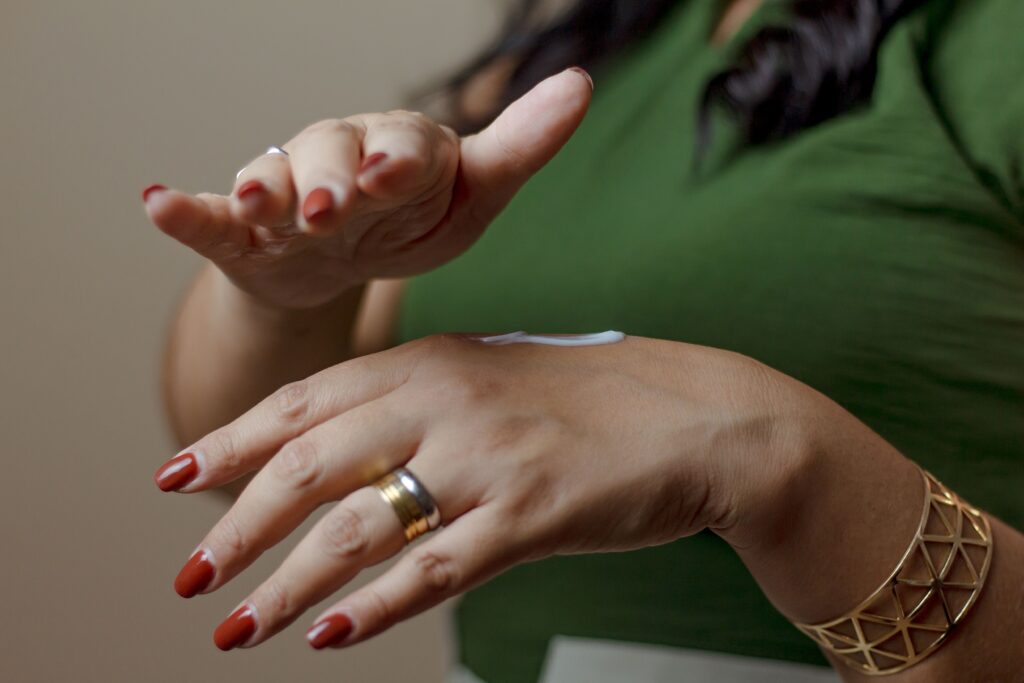
The outermost layer of human skin, scientifically known as the stratum corneum, provides the body’s first and most important line of defense.
This biological layer is essentially arranged like “bricks and mortar,” with dead cells (corneocytes) stacked like bricks and a protective layer of lipid matrix between them.
The healthy chemical composition of this lipid matrix includes approximately 50% ceramides, 25% cholesterol, and 10%–15% free fatty acids. Together, thes components prevent water from evaporating from the skin’s surface, a process known as transepidermal water loss (TEWL).
In addition, the stratum corneum contains Natural Moisturizing Factors (NMF), which are produced by the breakdown of a protein called filaggrin.
These components are highly hygroscopic, meaning they attract water, and maintain the elasticity of the skin by absorbing moisture from the outside environment.
When ambient humidity drops below 10% or the lipid matrix is damaged by frequent handwashing, excessive use of sanitizers, and harsh chemicals, the skin’s water content drops below a critical level.
As a result, the natural shedding of skin cells (desquamation) is severely affected, leaving the hands dry, rough, lifeless, and itchy, and triggering an endless cycle of inflammation and scratching (itch-scratch cycle).
How to Get Rid of Dry Hands? Step by Step
To treat extremely dry and rough hands, it is necessary to adopt a systematic, step-by-step medical strategy that reactivates the skin’s outer protective layers and accelerates cellular repair.
This process is scientifically known as the Outside-In Approach, which aims to maintain the skin’s natural mantle (i.e., pH 4.0–6.0) and minimize water loss.
AVOID HOT WATER
Using extremely hot water is extremely harmful to the skin, as it completely melts away the protective lipids and natural oils (sebum) on the skin’s surface.
Hot water denatures keratin in the skin, reducing cellular elasticity and rapidly increasing transepidermal water loss (TEWL).
In contrast, it is always recommended to use lukewarm water. Warm water effectively removes dirt and germs without damaging the skin’s natural oils. Furthermore, bathing and handwashing should be limited to 5–10 minutes.
Use a gentle Cleanser.
Common commercial soaps and cleansers contain harsh foaming chemicals such as Sodium Lauryl Sulfate (SLS), which severely damage the skin’s protective barrier.
These harsh detergents increase the skin’s pH, making it alkaline, which inactivates the enzymes that produce lipids and causes the skin layers to lose their moisture.
To solve this problem, choose gentle soaps and liquid cleansers that are free of alcohol, sulfates, and fragrances.
The table below explains the active chemical ingredients that should be present in cleansers and moisturizers to help retain skin moisture.
Keep your Hand Skin Moisturized Frequently.
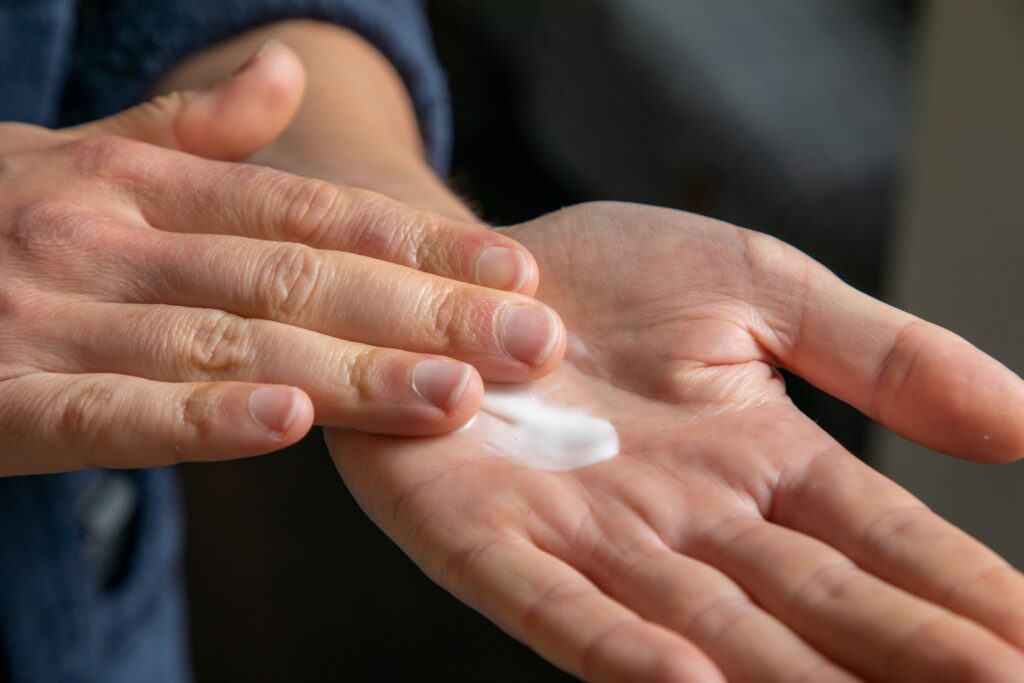
It is most beneficial to apply a moisturizer or cream immediately after washing your hands, while the skin is still moist.
When the skin is wet, external hydration temporarily softens the stratum corneum, and applying a moisturizer at this stage locks the water inside the cells. If the moisturizer is delayed, ambient air will remove any remaining moisture from the skin.
Since human hands are washed multiple times throughout the day and exposed to external factors such as wind, dirt, and chemicals, it is essential to apply a moisturizer after each hand wash to maintain skin elasticity and natural resilience.
Ways to Keep Hand Skin Moisturized
There are numerous products on the market to keep hand skin moisturized, selected based on skin dryness type, season, and time of day or night.
Hand Lotion
Hand lotions are basically low viscosity, with a much higher water content than oil or fat. This property helps them absorb quickly into the skin without leaving any stickiness or greasiness.
Hand lotions are ideal for people with normal to slightly dry skin who need to moisturize their hands during office hours or while driving quickly.
However, due to their high water content, they evaporate quickly and have a short-lived effect, so they need to be reapplied every few hours.
Hand Creams
Hand creams have a thick, heavy texture (High Viscosity), with a water-to-oil ratio equal to or higher than fat.
These products form a very strong protective layer on the skin that not only prevents moisture from escaping but also shields it from the harmful effects of cold, dry winds.
The wax, shea butter, and almond oil in them help repair cracked skin by penetrating deeply.
The structural and medical differences between hand lotion, hand cream, and hand balm (ointment) are explained in the following table:
Extra Tips to Keep Hands Moisturized
In addition to using medical moisturizers, incorporating two very simple yet scientifically proven steps into your daily life can go a long way toward maintaining hand moisture.
Wear protective gloves.
Household chores, such as washing dishes, cleaning, or gardening, expose the hands’ skin to harsh chemicals and soapy water.
These chemicals strip the skin of its protective lipids. Wearing protective gloves protects the skin from these external allergens and irritants.
In professional environments where prolonged glove wear is required, nitrile gloves (COATS®) with a cotton lining or an inner layer of colloidal oatmeal are highly beneficial.
Prolonged use of rubber gloves without a moisturizer causes sweat to accumulate, altering skin pH and increasing the risk of bacterial infections. Therefore, it is a wise medical practice to apply a light hand cream to the hands before putting on gloves.
Use a humidifier.
During the winter, artificial heaters remove all moisture from the room air, making the environment extremely dry.
This dry air sucks moisture from the skin cells under osmotic pressure, causing the hands to become rough and lifeless. Using a humidifier in the room maintains the room’s humidity at 30%–50%.
This slows transepidermal water loss by maintaining the moisture balance in the air, allowing the enzymes that produce the skin’s natural moisturizing factors (NMF) to work more effectively.
Most Importantly, a Healthy Diet Is a Healthy Diet.

External skin care is incomplete unless the body receives the necessary internal nutrition.
Clinical research has proven that omega-3 polyunsaturated fatty acids (Omega-3 PUFAs), the main sources of which are fish oil, flaxseeds, and walnuts, are the backbone for skin cell stability.
Omega-3 fatty acids (including EPA and DHA) increase cell elasticity and produce anti-inflammatory compounds, such as resolvins and proteins, that block the effects of omega-6 fatty acids that cause inflammation in the body.
A randomized controlled clinical trial (RCT) found that people who regularly consumed omega-3 and vitamin E for 12 weeks experienced significant improvements in skin moisture, elasticity, and barrier function.
Apart from this, other vitamins and minerals also play a key role in relieving dry skin, as detailed in the table below.
Overnight Treatment for Dry Hand Skin

Human skin speeds up cellular regeneration at night, which is why nighttime treatments are most effective.
To relieve severe dryness and deep cuts on your hands, wash your hands with lukewarm water before bed, pat them dry, then apply a generous amount of a thick moisturizer like Vaseline, Eucerin, or Aquaphor.
Then, put on 100% cotton gloves. There is a deep medical mechanism behind wearing cotton gloves called occlusion.
These gloves prevent moisturizer from getting onto bed linens and create a sealed environment that prevents water from escaping from the skin’s lower layers.
As a result, the outer surface of the skin becomes extremely soft, the cracks between cells fill faster, and the health of the nail cuticles improves.
According to a scientific study, regular use of cotton gloves at night for four weeks significantly reduced the severity of severe eczema and dermatitis on the hands.
If gloves are not available, clean cotton socks can also be used as an alternative. Another useful method is to apply cream to the hands and wash the kitchen utensils with warm water, as the heat of the hot water helps the cream penetrate deeper into the skin pores.
Seek Medical Advice If Dryness Is Severe Or Persistent.
Often, dry hands are not just a result of changes in the external environment, but can also be a sign of an internal medical condition.
If the dryness does not go away despite all home remedies, regular use of moisturizers, and a diet rich in omega-3 fatty acids, or if the skin on your hands starts to bleed, you should immediately consult a dermatologist.
This persistent dryness may reflect atopic dermatitis, psoriasis, thyroid disorders, or the hereditary disease ichthyosis.
In addition, cracks that form on dry hands become a route for harmful germs to enter.
The following symptoms are clear signs of bacterial infection or cellulitis, which require immediate emergency medical attention when they appear:
Rapid spread of severe redness or the formation of red streaks on the affected area.
Unusually Warm Skin And Severe Pain When Touched.
Yellowish pus or foul-smelling fluid draining from cracks or wounds.
High fever, chills, or nausea along with swelling.
In the presence of these symptoms, self-medication should be avoided, and antibiotics or specific anti-inflammatory ointments should be started with the advice of a qualified doctor to prevent the infection from spreading to the bloodstream.
This information is for informational purposes only. For medical advice or diagnosis, consult a professional.