
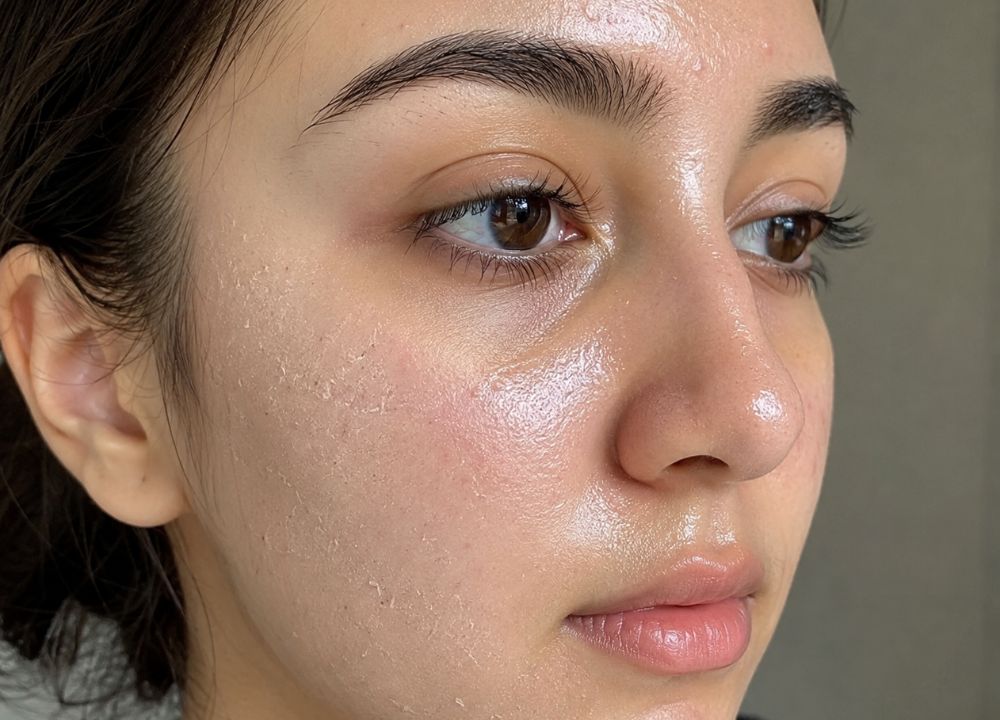
Your face is gleaming, but it feels tight. You wash it, and it appears greasy again after an hour, but the skin around your cheeks feels rough and dry. It’s like your skin doesn’t know what it wants to do, and that’s a pretty frustrating place to be.
This happens because oiliness and dryness are two separate things. One is how much oil your skin produces, and the other is how much water your skin retains. Dehydrated skin can lead to increased oil production to compensate for the lack of water, which is why it can be easily mistaken for ordinary oily skin. It’s not confused, it’s self-preserving.
And if you continue to treat your skin as just greasy and disregard this, things can get worse! You could be using harsh products that strip away moisture, which just prompts additional oil production. Your flakiness becomes worse, your pores get bigger, and your skin never feels balanced.
The good news is that once you know what is truly going on, it’s not that difficult to repair. Here’s your guide to why your skin is oily and dry at the same time, plus genuine, practical remedies for every symptom you’re struggling with.
Why Is My Skin Oily One Day and Dry the Next?
Some days your face feels tight and looks dead. Or it’s shining by midday on certain days. This back-and-forth is not random. Your skin responds to what is going on around you and inside your body.
Hormones have a huge part in it. Hormonal shifts associated with puberty, menstrual cycles, and menopause may increase oil production in some areas while causing dryness in others. So if your skin switches from oily to dry at particular times of the month, hormones are probably involved.
Weather and your skincare routine also matter a lot. The cold air will draw moisture away from your skin, and if you switch to a heavy product too quickly, it will clog your pores. Skin is continually adjusting, and when it has to adjust too much, it shows.
Why Is My Skin So Oily and Dehydrated?
This is where many folks get mixed up. Hydrated skin is not the same as oily skin. Dehydration is a skin issue that can affect all skin types, including oily skin. The skin is dry and compensates by overproducing oil. So oily skin can actually indicate that your skin is thirsty.
This may be due to harsh cleansers, not moisturizing, excessive caffeine intake, or insufficient water intake. Dehydration can make oily skin look greasy. This can happen if you don’t drink enough water, consume too much coffee or alcohol, or eat a diet low in water-rich foods. This causes your skin to overproduce oil on the surface while leaving the inner layers dry. Why does my skin feel dry but look oily?
This is the most prevalent indicator of dehydrated oily skin. The oil on your face isn’t hydration; it’s your skin’s reaction to dehydration. These are two quite different things.
Your skin barrier is what holds the water in. If that barrier is compromised, water leaks out, and your oil glands have to work harder. Which is why you might have tight, painful skin but seem greasy in the mirror.
Why Is My Skin Oily On The Surface And Dry On The Inside?
Skin makes oil on the surface, but it keeps water in deeper down. And then, when the water drops into those deeper layers, you feel that dryness beneath, even with oil on top.
Harsh cleaners, over-exfoliating, hot water, etc., compromise the skin barrier, causing the skin to lose water rapidly. In an attempt to protect the skin, the oil glands react by producing even more oil. You end up with that oily-on-top, dry-underneath feeling that no single product seems to remedy.
Why Is My Oily Skin Suddenly Dry & Flaky?
If your skin was merely oily previously and now it’s also flaking, something changed. A new product, a change in the weather, or even a new medicine might change how your skin acts overnight.
Overdoing it with active ingredients like retinol, salicylic acid, or exfoliating acids can break down the skin barrier, causing moisture to leave while the oil glands are still working. This creates a frustrating cycle in which your skin is both sensitive and oily.
Why do I suddenly have oily and dry skin?
An abrupt shift is often a sign of a compromised skin barrier. When the barrier is compromised, your skin dries up rapidly and then produces excess oil. It happens quickly, and the more products you throw at it, the worse it feels.
The solution: Stop bombarding your skin. Pare the routine with a gentle cleanser, a basic moisturizer, and sunscreen. Let your skin barrier heal before throwing anything else back in.## What causes these sudden skin changes?
Stress, lack of sleep, diet changes, and seasonal variations all trigger. Your skin shows what’s going on inside of you. “Your skin is the first thing to go when something’s wrong.
The environment matters, too. Central heating, pollution, and UV exposure all compromise the skin barrier. Winter. After that barrier is broken down, the oily-and-dry cycle kicks in almost instantly.
Why Is My Skin Oily Yet Tight?
Tightness is a classic symptom of dehydration in oily skin. Tightness is usually assumed to be a sign of dry skin, even if you have oily skin, you can experience that tight, stretched feeling when you wash your face.
If you use a cleanser that is too harsh, it will strip away oil, and the water your skin needs to feel comfortable will be removed as well. Your oil glands spring into action to make up for it, and your skin is shiny again within hours, but still tight beneath.
What Is Tight Oily Skin?
Tight, oily skin suggests your skin is producing oil but losing water. Even if your skin seems shiny, it could feel strained or parched after cleansing. This is the classic indicator that the skin’s lower layers are not getting enough water.
That is your barrier telling you it needs to aid you. It isn’t stiffness from being clean, it’s tightness from being stripped. A mild cleanser and a little moisturizing serum can turn things around within days.## How to loosen things up without adding more oil
Switch to a gel or cream cleanser that doesn’t lather much. Follow immediately with a water-based hyaluronic acid serum. This draws moisture into the skin without adding any oil.
Avoid alcohol-based toners, skip mattifying products for now, and give your skin barrier a chance to repair. Once your skin is sufficiently moisturized, the oil production will frequently balance out on its own.
Oily skin peeling: causes and solutions
With oily skin, peeling usually signifies one of two things. Either your skin barrier is compromised from over-exfoliating, or your skin is so dry that the outermost layer is starting to flake off.
Flaky skin on oily skin is frequently caused by overproduction of oil combined with a lack of moisture. Loss of the skin’s natural water content causes it to compensate by producing oil, and the dry surface begins to peel. That’s why the flakes and the shine are there at the same time.
Is Peeling Oily Skin a Sign of Damage?
Yes, it is in most circumstances. Peeling suggests your skin barrier isn’t holding onto moisture adequately. This might happen if you overuse actives, wash too often, or use products that are too abrasive for your skin.
It can also indicate you’re missing moisturizer, since your skin feels oily. That’s one of the worst mistakes.” Oily skin still needs moisture, and without it the surface dries and flakes while the oil glands are still functioning under the surface.## How to Stop Peeling and Not Make Skin Greasy
Do not brush off the flakes. It further blurs the border, making it worse. Instead, go for a very mild enzyme exfoliator once a week, followed by an oil-free moisturizer.
Look for compounds like ceramides and niacinamide. They restore the barrier and prevent water loss without increasing heaviness or greasiness. Give your skin constant, gentle treatment for two to three weeks before expecting major benefits.
How to Balance Skin That’s Oily AND Dry?
The key to balancing this skin type is one thing: keeping your skin hydrated without producing excess oil. That requires choosing the correct products and sticking to a straightforward routine.
Avoid over-cleansing, don’t skip moisturizer, and don’t use products meant solely for oily skin. Plus, a lot of oily skin creams are about stripping the oil, which can dry your skin out and make the dehydration even worse.## The best ingredients for dry oily skin
Your best friend in this is hyaluronic acid. It takes water from the surroundings into the skin, no oil. Niacinamide is another great one, as it balances oil production while fortifying the skin barrier.
Ceramides help repair and preserve the skin barrier so that water doesn’t keep escaping. Together, the three substances attack the real problem: a weak barrier and low water content, not just surface oil.
Poor Skincare Practices for Oily-Dry Skin
Washing your face more than twice a day removes the skin’s natural oils and tells the oil glands to produce more. Alcohol toners perform the same thing. These practices feel like they help, yet actually make the cycle worse.
Another biggie is not using sunscreen. UV radiation breaks down the skin barrier, which accelerates water loss. Every morning, guard your barrier with a lightweight, non-comedogenic SPF to enhance your moisturizer’s efficacy.
Developing a Routine for Combination Dehydrated Skin
Morning routine: mild cleanser, hyaluronic acid serum, light moisturizer, SPF. That’s all it takes to get started. Night: same gentle cleanser, niacinamide serum, somewhat heavier moisturizer with ceramides.
Keep things simple the first month. Your skin barrier needs consistency in order to restore itself. Before adding in one active ingredient at a time and seeing how your combination skin responds, your skin has to be balanced.
FAQS
Is it possible for oily skin to be dehydrated at the same time?
Yes, it can. Oily skin occurs when your glands create too much sebum. Dehydration is the lack of water in your skin. Those are two independent issues that might occur concurrently.
Why does my skin get oily again so fast after washing?
Your cleanser is likely too harsh. It draws moisture out. Your skin overcompensates by producing too much oil. Switching to a moderate, non-foaming cleanser often helps the oiliness to subside on its own.
Is it OK to use moisturizer if I have oily skin?
Yes, always. If you don’t use moisturizer, your skin will produce more oil. Use a mild moisturizer (water-based), and over time, your skin will start to produce less oil.## What is the skin pinch test for dehydration?
Gently squeeze a little section of your cheek. If it takes a while for the skin to snap back or looks a little wrinkled for a second, your skin is probably dry, even if it feels oily.
How long does it take to cure dehydrated oily skin?
Most people show improvement in two to four weeks with the appropriate program. It’s not about expensive items; it’s about consistency. Keep it simple, keep hydrated, and your skin will start to even out.