
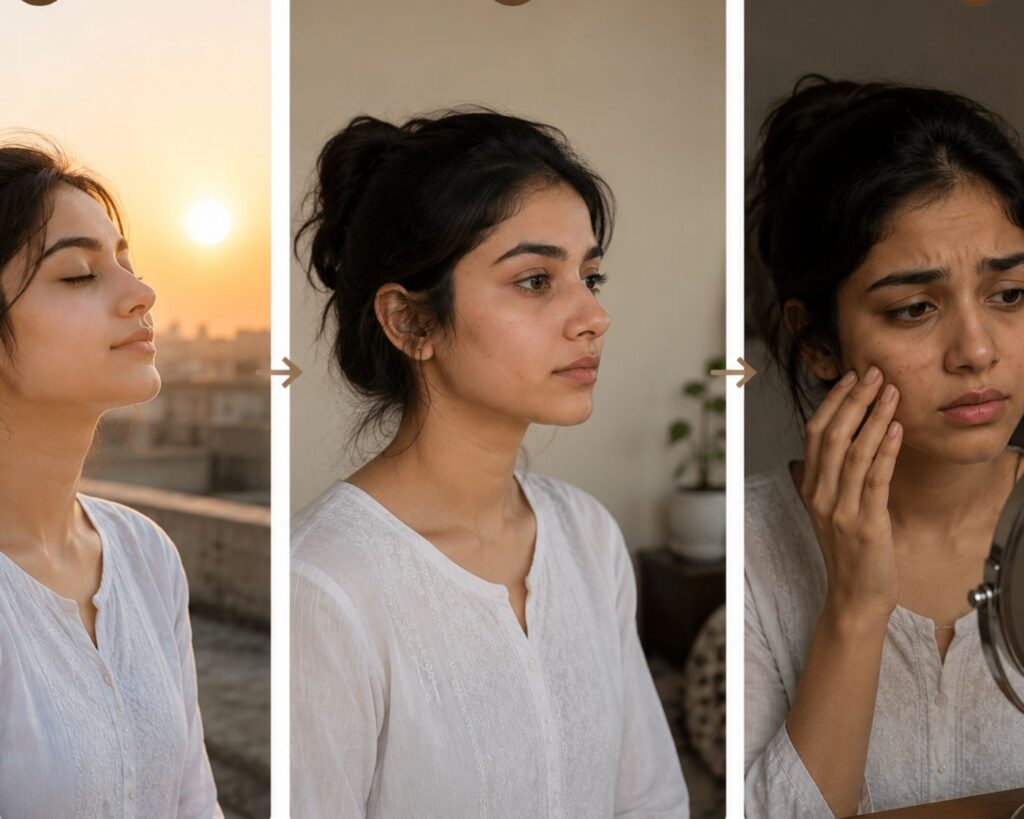
Many people step outside for a few hours and then stand in front of the mirror expecting to see a tan. Nothing shows up, and they think something is wrong. That is actually normal, and there is a real reason for it.
Your body does not start darkening your skin the moment UV rays hit it. First, it focuses on repairing DNA damage in the skin cells. Only after that repair process is complete does melanin production actually begin, which is why the color shows up hours or even days later. So the delay is not a problem; it is your skin protecting itself.
But if this process repeats without proper protection, the damage builds up faster than the skin can fix. The more sun exposure you get, the earlier your skin starts to age, and over time, UV damage takes a toll on your skin and its underlying connective tissue. That is a real long-term loss that most people do not think about in the moment.
According to Technology Networks, how long it takes for a tan to show can range from 24 to 72 hours, depending on skin type, UV intensity, and individual repair capacity. So if your skin looks the same right after sun exposure, give it a day or two.
The good news is that once you understand how this works, you can protect your skin better and still enjoy the sun without paying a price later.
I
s Darker Skin a Result of More Sun Exposure
Spending more time in the sun does lead to darker skin, but it is not a direct or instant process. The body triggers a whole chain of events before any visible color change happens.
When UV rays hit your skin, your body reads it as a threat. It starts producing more melanin, which is the pigment that gives skin its color, as a way to shield itself from further damage.
Why Does the Skin Darken with Sun Exposure?
Melanin is made by cells called melanocytes, which sit in the deeper layers of your skin. When UV rays hit the skin, they stimulate melanocytes to produce more melanin as the skin’s natural defense. That extra melanin absorbs UV and protects the skin, but it also darkens the skin into what we see as a tan.
There are two types of UV rays involved here, and they work differently. UVA rays penetrate deep into the skin and take a little longer to show effects, while UVB rays cause more damage to the top skin layer and both appear and heal a bit faster.
Not everyone darkens at the same speed. Your skin type, how strong the sun is, and even the time of day all play a role. Midday sun, typically between 10 a.m. and 2 p.m., has the strongest UV exposure, which means tanning during this window is faster but also more dangerous.
How Long for Skin to Darken After Sun Exposure?
Most people expect to see color the same day, but that is rarely how it works. Melanogenesis, the process by which melanocytes produce melanin, takes several days, or 72 hours on average. Immediate darkening right after sun exposure is rare and usually only happens if you already have existing melanin built up.
A tan can take anywhere from 24 to 72 hours to show up, depending on your skin type, UV intensity, and how well your cells repair themselves. People with naturally darker skin tones may notice a change a little sooner, while fair-skinned people often need more exposure time and still may not tan much.
Depending on the sunburn severity, it can take one to two weeks for the skin to fully heal and darken. Sunburns that blister often take longer and may need medical attention. So if you pushed too far, the process gets slower, not faster.
How to Treat Dark Skin Due to Sun Exposure?
Once the skin darkens from sun exposure, many people want to fade it or at least stop it from getting worse. The good news is that there are both home options and professional treatments that actually work.
The first and most important step is to stop adding more damage. No treatment will work well if you keep going out in the sun without protection.
Home Remedies for Sun-Darkened Skin?
Some simple ingredients can help fade sun-darkened skin over time. Aloe vera contains active compounds called aloesin and aloin that can lighten sunspots and other hyperpigmentation. Vitamin C is another option, as topical L-ascorbic acid may help protect the skin from UV rays, promote collagen production, and lighten dark spots.
Retinol products are available over the counter and can smooth fine lines and fade dark spots. Alpha hydroxy acids or vitamin C can also lightly exfoliate the skin and reduce texture changes caused by sun damage.
Applying sunscreen every two hours, wearing a wide-brimmed hat, and avoiding the sun between 10 a.m. and 2 p.m. are all steps dermatologists recommend to prevent dark spots from getting worse. Without these steps, even the best home treatments will keep losing the battle.
When to See a Dermatologist for Sun Darkening?
Home remedies have their limits. If dark spots are growing, changing shape, or not fading after a few months of consistent care, it is time to see a professional. Laser therapy can target dark spots caused by sun damage, and the CO2 laser in particular produces the most dramatic improvement in sun-damaged skin, though it comes with the most recovery time.
Every time you go outdoors without sun protection, UV light damages your skin, and over time, this damage builds up and can make you look years older than you naturally would. A dermatologist can assess exactly how far the damage has gone and recommend the right treatment.
If dark spots are growing in size, changing in color, or if new spots keep appearing as others fade, those are signs to get a professional evaluation. Some changes on the skin can look like harmless darkening but need a closer look.
FAQs
Does skin darken immediately after sun exposure?
No, it does not. Your body first focuses on repairing DNA damage before it starts producing more melanin. Visible darkening usually takes at least a day or two to show up.
Why does my tan look darker the next day?
Because melanin production kicks in after the DNA repair process is done. The color keeps developing for up to 72 hours after sun exposure, so the next-day tan is actually your skin finally catching up.
Does everyone’s skin darken the same way in the sun?
No. Your skin type plays a big role. Fair skin may burn before it tans, while darker skin tones usually tan more easily and with less risk of burning. UV intensity and exposure time also matter.
Can sun-darkened skin go back to its original color?
Yes, in many cases, it can fade with time and the right care. Using vitamin C serums, retinol, and daily sunscreen can help. But repeated sun damage over years can cause permanent changes that need professional treatment.
How long does a tan from sun exposure last?
A natural tan usually fades within 7 to 10 days as the outer skin cells shed and are replaced. If you had deeper or repeated sun exposure, it may take a few weeks to fully fade.