
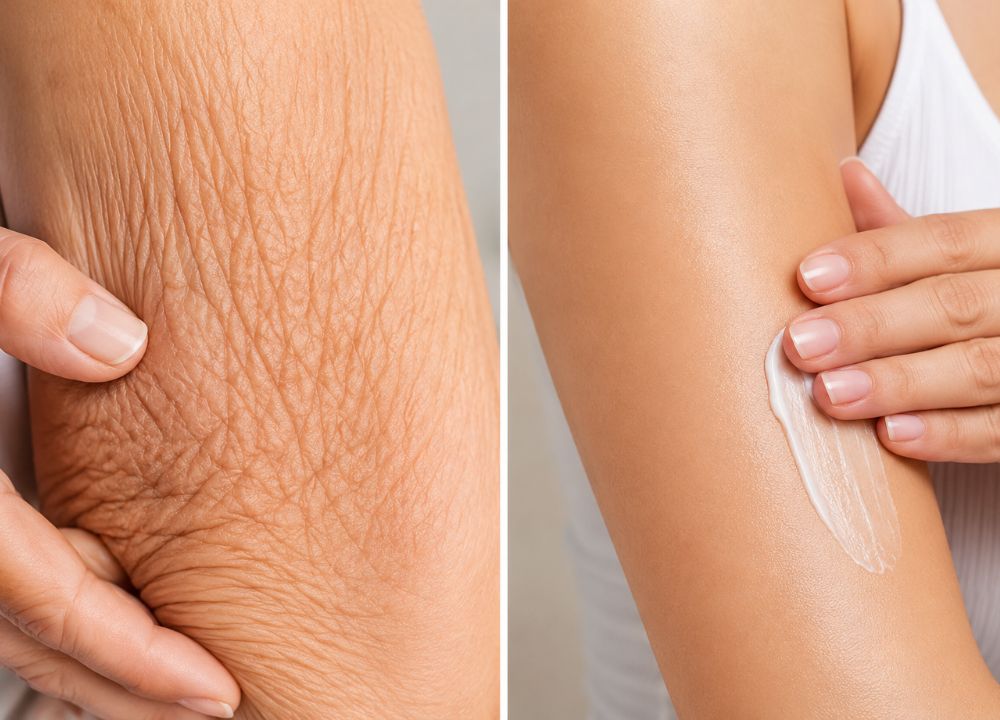
Skin that once felt firm starts to look thin, loose, and wrinkled like tissue paper. That slow change can feel frustrating, especially when it seems like nothing is working.
The main reason this happens is that your skin loses collagen and elastin over time. Sun damage, dehydration, and aging all accelerate this process more than most people expect.
According to the American Academy of Dermatology, the body produces about 1% less collagen each year after age 20, leading to thinner skin with reduced elasticity over time. If you ignore it, the texture keeps getting worse and becomes harder to treat.
The good news is that knowing how to get rid of crepey skin starts with understanding what it is and what actually helps. With the right approach, you can visibly improve your skin without spending a fortune.
- What Is Crepey Skin and Why Does It Happen?
- How Do You Get Rid of Crepey Skin Naturally?
- How Do You Get Rid of Crepey Skin on Your Face?
- How Do You Get Rid of Crepey Skin Under Eyes?
- How Do You Get Rid of Crepey Neck Skin?
- How Do You Get Rid of Crepey Skin on Arms?
- How Do You Get Rid of Underarm Crepey Skin?
- How Do You Get Rid of Crepey Skin on Elbows?
- Professional Treatments for Crepey Skin
- Ingredients That Actually Work on Crepey Skin
- How to Prevent Crepey Skin From Getting Worse?
- FAQS
What Is Crepey Skin and Why Does It Happen?
Crepey skin is a common condition where the skin looks finely wrinkled, similar to crepe paper, and may feel fragile, loose, or thinner than usual. It is not the same as regular wrinkles, and treating it requires a slightly different approach.
Common Causes of Crepey-Looking Skin
Most of the time, the main cause of crepey skin is exposure to ultraviolet rays from the sun or tanning beds without proper protection. Other causes include aging, genetics, dry skin, smoking, pollution, and rapid weight loss.
Each of these causes breaks down the skin’s structure in its own way. Some are in your control, and some are not, but knowing them helps you make smarter choices going forward.
How Crepey Skin Differs From Regular Wrinkles?
Regular wrinkles tend to form in lines and creases from repeated facial movements. Crepey skin is different because it covers larger areas and feels thin and delicate, not just folded.
While crepey skin may look similar to wrinkles, it tends to feel noticeably more fragile and may also sag or feel loose to the touch. That difference matters when choosing treatments, because what works on wrinkles does not always work here.
How Do You Get Rid of Crepey Skin Naturally?
Starting with natural methods is a smart move, especially if your skin is in the early stages. Small, consistent habits can make a real difference over time without any harsh treatments.
Hydration and Diet Changes That Improve Skin Texture
Drinking more water is one of the simplest things you can do for your skin. When your body is well hydrated, your skin holds its shape better and looks plumper.
A diet high in antioxidants can help support the health of your skin, and vitamin C in particular may be beneficial because it supports collagen production. Adding more fruits, vegetables, and healthy fats to your meals gives your skin the building blocks it needs.
Natural Oils and Home Remedies for Crepey Skin
A simple home moisturizer made from honey and olive oil can provide deep hydration to crepey areas, whether on the elbows or under the eyes. These two ingredients are gentle, affordable, and easy to apply daily.
Coconut oil, almond oil, and shea butter are also good options to massage into crepey areas. Regular massage helps with circulation, too, which supports skin repair from underneath.
Lifestyle Habits That Help Reverse Crepey Skin
According to beauty experts, preventative habits like proper nutrition, maintaining a stable weight, and avoiding excessive drinking and smoking keep skin plumped and healthy. These changes do not just slow aging; they actively support skin recovery.
Getting 7 to 8 hours of sleep each night matters more than most people think. Your skin repairs itself during sleep, and skipping rest shows up on your face faster than almost anything else.
How Do You Get Rid of Crepey Skin on Your Face?
The face is usually where crepey skin becomes most noticeable first. Because facial skin is thinner and more exposed, it needs targeted care with the right ingredients.
Best Ingredients to Look for in Facial Treatments
Moisturizing creams that contain retinoids help stimulate collagen production and speed up the generation of new skin cells, making them ideal for crepey skin. Hyaluronic acid pulls moisture into the skin and helps thicken and plump it over time.
Vitamin C serums are also worth adding to your routine. Vitamin C helps increase collagen production, which adds structure and thickness to areas that have become thin and crepey.
Daily Skincare Routine for Crepey Facial Skin
Washing your face twice a day, once in the morning and once at night, is essential for those dealing with crepey skin because it creates a clean surface for treatment products to work effectively. Skipping this step means your creams and serums are working against a layer of buildup.
At night, apply a retinol or peptide cream after cleansing and let it absorb fully. Consistency with this routine over weeks is what actually creates change you can see.
How Do You Get Rid of Crepey Skin Under Eyes?
The under-eye area is one of the first places crepey skin appears and also one of the hardest to treat. The skin there is thinner than almost anywhere else on the face.
Why the Under-Eye Area Is Especially Prone to Crepe-Like Texture?
Crepey skin under the eyes is characterized by loose, saggy skin and fine lines that resemble crepe paper, typically appearing beneath the lower eyelid and sometimes extending toward the outer eye and cheeks. The skin in this area has fewer oil glands, which makes it dry out faster.
Less collagen, constant movement from blinking and expressions, and thin skin all work against this area. That is why it needs more targeted and gentle care compared to the rest of the face.
Targeted Treatments and Techniques for Under-Eye Crepey Skin
Gently massaging the area around the eyes a few times a week can stimulate blood flow, firm up crepey eyelids, and help reduce puffiness, especially when paired with a hydrating cream or serum.
Using retinol around the eyes helps increase collagen production to add structure and thickness to this naturally thin area of skin. Apply it carefully and always follow with a good eye cream in the morning.
How Do You Get Rid of Crepey Neck Skin?
The neck gets overlooked in most skincare routines, and that shows up quickly. Crepey neck skin is one of the clearest signs of aging and is hard to hide.
Why Neck Skin Loses Firmness Faster
Neck skin is naturally thinner than facial skin and produces less oil. It also gets a lot of UV exposure without the same level of sun protection most people apply to their faces.
Constant movement, gravity, and the lack of daily care all contribute to the skin here becoming loose and crepey faster. Once it starts sagging, it takes consistent effort to see improvement.
Creams, Exercises, and Treatments for the Neck Area
Facial and neck exercises that massage the skin and firm underlying muscles can significantly reduce the appearance of crepey skin on the neck when practiced consistently over several weeks. These exercises work by building support in the tissue below the skin.
Applying a firming cream with retinol or peptides to the neck every night is also very effective. Treat your neck with the same care you give your face, and you will start to see results.
How Do You Get Rid of Crepey Skin on Arms?
Arms, especially the upper inner arms, are a common area for crepey skin to develop. This is partly due to sun exposure and partly because the skin here loses elasticity faster with age.
Moisturizing and Exfoliation Strategies for Arm Skin
Exfoliating your arms two to three times a week removes dead skin and allows your moisturizer to absorb better. Use a gentle scrub or a washcloth rather than anything too harsh.
After exfoliating, apply a thick body lotion with ingredients like urea or lactic acid. These ingredients do not just moisturize; they actively improve the skin texture over time.
Firming Treatments Suited for Larger Surface Areas
Body lotions with retinol are now widely available and work well on the arms. They take longer to show results on larger areas, but regular use does improve firmness.
Adding emollients and hydroxy acid cleansers to your skincare routine not only helps prevent the skin from becoming more crepey but also helps stop further damage if the skin is already lax. These are practical and affordable options that are easy to build into a daily routine.
How Do You Get Rid of Underarm Crepey Skin?
Underarm crepey skin is not talked about as much, but it bothers a lot of people. The skin here is delicate and needs careful treatment.
Why Underarm Skin Becomes Loose and Thin?
The underarm area loses fat and collagen with age, just like everywhere else. Frequent waxing, deodorant buildup, and friction from clothing can also irritate and thin the skin over time.
Weight loss can make this area look more crepey by reducing the natural padding under the skin. Once the skin is stretched, and then the volume beneath it decreases, the loose texture becomes more visible.
Safe Treatment Options for Sensitive Underarm Skin
Start with a gentle, fragrance-free body lotion applied daily after showering. Look for formulas with aloe vera, glycerin, or hyaluronic acid, as these are calming and hydrating without irritating sensitive skin.
Avoid strong acids or retinol in this area at first, as the skin can react. Once your skin adjusts to basic hydration, you can slowly introduce a mild firming cream.
How Do You Get Rid of Crepey Skin on Elbows?
Elbows take a lot of pressure throughout the day and tend to get dry very fast. That dryness, combined with constant friction, makes a crepey texture here very common.
Why Elbows Are Prone to Rough, Crepey Texture?
The skin on the elbows has fewer oil glands, which means it dries out quickly without much help. Leaning on hard surfaces also causes regular stress on this skin, which breaks it down over time.
Most people forget to moisturize their elbows in their daily routine. That neglect adds up, and the skin becomes rough, thick in some spots, and crepey in others.
Targeted Exfoliation and Moisturizing Techniques for Elbows
Scrub your elbows with a sugar or salt scrub two to three times a week to remove the buildup of dead skin. This step alone can make a visible difference in texture within a few weeks.
Follow immediately with a thick cream or oil while the skin is still slightly damp. Shea butter, coconut oil, or any urea-based cream works very well and keeps the skin soft through the day.
Professional Treatments for Crepey Skin
When at-home methods are not enough, professional treatments can deliver faster and more visible results. These are worth knowing about, especially for more advanced cases.
Laser Therapy and Radiofrequency Treatments
Laser treatments stimulate collagen production and improve skin texture, with options like CO2 laser resurfacing offering dramatic improvements and Fraxel providing gradual results with less downtime. RF microneedling combines tiny needles with radiofrequency energy to trigger collagen growth and is highly effective for treating crepey skin on the face, neck, and body.
Fractional laser skin resurfacing improves skin elasticity and firmness by stimulating collagen production, and it also smooths wrinkles and fine lines. However, it is not recommended for people with darker or tanned skin.
Chemical Peels and Microneedling
Medium-to-deep chemical peels, such as TCA or glycolic acid peels, help remove damaged outer layers of skin while stimulating collagen renewal for firmer skin. Results build gradually over a few sessions.
Profound RF, which combines deep microneedling with radiofrequency energy, promotes faster collagen formation and can be used on many body parts, including the arms and legs. It is one of the more effective options for larger crepey areas.
When to See a Dermatologist?
If your skin has been progressively getting worse despite consistent home care, it is time to get professional advice. A dermatologist can assess your skin’s condition and recommend treatments that are appropriate for your skin type and severity.
Your skin, the cause of the crepey texture, and its location on your body can all determine which treatments work best, and you may need to try more than one approach before finding the right fit. A dermatologist helps you avoid wasting time and money on the wrong options.
Ingredients That Actually Work on Crepey Skin
Not every ingredient that claims to fight aging actually works. Knowing which ones are backed by real results saves you a lot of time and money.
Retinol and Vitamin C
Retinol topical creams help restore skin’s elasticity and thicken collagen, which gives skin its structure, as well as elastin, which gives skin its stretch. It is one of the most studied and proven ingredients for aging skin.
Peptides signal the skin to enter repair mode and produce more collagen and elastin, the two proteins responsible for keeping skin smooth and firm. Used together with vitamin C, these form a strong anti-aging combination.
Hyaluronic Acid and Peptides
Hyaluronic acid is a moisture magnet that draws water into the skin and keeps it there. It plumps the skin from within and makes the crepey texture look noticeably smoother.
Peptides go deeper by triggering the skin’s own repair process. They work slowly but steadily, and the results compound the longer you use them consistently.
Alpha Hydroxy Acids (AHAs)
AHAs like glycolic acid and lactic acid gently dissolve dead skin cells on the surface. This reveals fresher skin underneath and helps other active ingredients penetrate better.
Alpha-hydroxy acid is a beneficial ingredient to look for in skincare products, including cleansers, as it supports the renewal of the skin’s surface and improves overall texture. Use it a few times a week rather than every day to avoid over-exfoliating.
How to Prevent Crepey Skin From Getting Worse?
Treating crepey skin is important, but slowing it down matters just as much. A few consistent habits make a big difference over months and years.
Sun Protection as a Daily Priority
UV rays are one of the top causes of crepey skin, and most people do not use sunscreen consistently enough. Applying a broad-spectrum SPF 30 or higher every single morning, even on cloudy days, is the single most effective thing you can do.
The earlier you start using sunscreen and incorporating it into daily life, the less chance you will end up with crepey skin over time. It protects the collagen you still have, which is far easier than rebuilding it later.
Long-Term Skincare Habits That Maintain Skin Elasticity
Staying hydrated, eating well, sleeping enough, and moisturizing daily all add up over time. None of these things works overnight, but together they keep your skin in much better condition as you age.
Staying consistent with even a basic skincare routine is more effective than doing intensive treatments once in a while. Your skin responds to habits, not occasional effort.
FAQS
Can crepey skin be fully reversed?
Fully reversing crepey skin is not always possible, but it can definitely be improved. With consistent use of retinol, peptides, and professional treatments, many people see noticeable results.
At what age does crepey skin usually start?
Most people start noticing it in their 40s or 50s, but it can appear earlier with heavy sun exposure or rapid weight loss. Starting a good skincare routine in your 30s helps delay it.
Does drinking more water help with crepey skin?
Water alone will not fix it, but dehydration definitely makes it worse. Well-hydrated skin always looks plumper and healthier, so it is one piece of the puzzle.
How long does it take to see results from treatment?
Most topical treatments take at least 8 to 12 weeks of consistent use before visible changes appear. Professional treatments like laser or radiofrequency tend to show results faster.
Is crepey skin the same as sagging skin?
They are related but not exactly the same. Crepey skin refers to the fine, paper-like texture, while sagging is more about the loss of volume and