
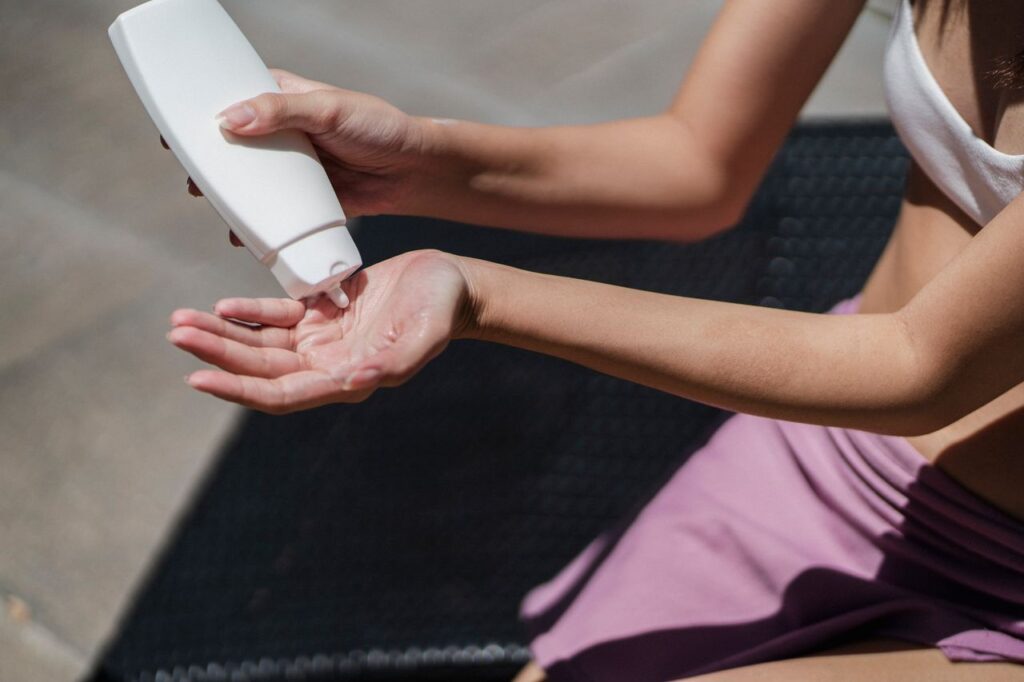
You put on sunscreen to protect your skin, and somehow your skin punishes you for it.
A few days later, small bumps show up along your jaw or forehead, and the question creeps in.
Does sunscreen cause acne, or is something else going on?
The honest answer depends on what sits inside the bottle, not on sunscreen as a category.
Some formulas sit heavy on the skin and clog pores, while others feel weightless and calm.
By the end of this piece, you will know exactly which type is doing what to your skin.
Does Sunscreen Cause Acne
Sunscreen on its own does not cause acne.
The active ingredients that block UV rays are not the problem most people run into.
What actually causes breakouts is everything else mixed into the formula around those UV filters.
Heavy oils, thick silicones, and certain waxes can sit on the skin and block pores.
Dermatologists who treat acne patients confirm this pattern again and again in their practices.
Skin doctors note that sunscreen itself isn’t inherently acne-causing, though certain textures and additives can push acne-prone skin into a flare.
So the real question isn’t whether to wear sunscreen, but which formula fits your skin.
Mineral Sunscreens and Acne-Prone Skin
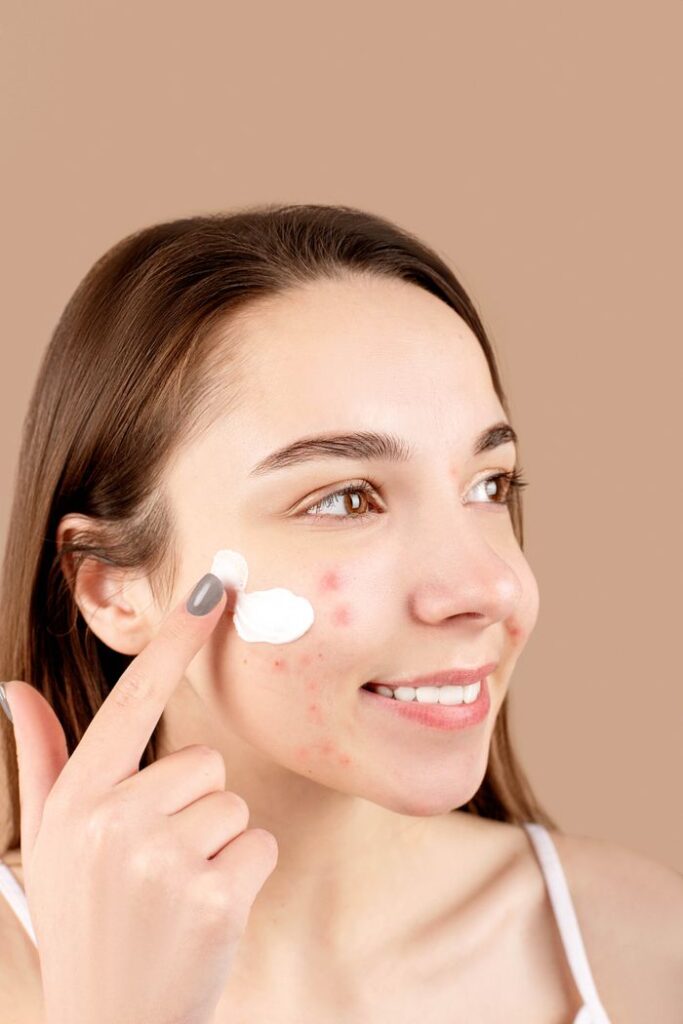
Mineral sunscreens use zinc oxide or titanium dioxide as their active shield against the sun.
These minerals sit on top of the skin instead of soaking into it.
Because they act more like a physical block, they rarely sneak into pores and cause trouble.
This is one reason dermatologists lean toward mineral formulas for people who break out easily.
That said, a mineral sunscreen can still misbehave if its other ingredients are thick or greasy.
A tube of zinc oxide mixed with heavy oils will not protect your pores just because it’s mineral.
Always check the full ingredient list, not just the active sunscreen filter on the label.
Chemical Sunscreens and Acne-Prone Skin
Chemical sunscreens work in a completely different way from mineral ones.
They absorb UV rays and convert that energy into heat, which the skin then releases.
For acne-prone skin, this process can create a problem mineral sunscreen usually avoids.
That released heat, combined with certain sunscreen chemicals, can act like a seal over the skin.
This seal traps sweat and oil close to the pore, which can spark new breakouts.
Some chemical filters, including avobenzone and octinoxate, are also known to irritate sensitive or reactive skin.
Irritation on its own can mimic acne or make existing blemishes look angrier than they are.
None of this means chemical sunscreen is off the table for everyone with acne.
Lightweight, well-formulated chemical sunscreens exist and work fine for plenty of acne-prone users.
Silicone-Based and Hybrid Sunscreens and Acne-Prone Skin
Silicone-based sunscreens are prized for their silky, blurred finish on the skin.
That smooth glide comes from ingredients like dimethicone, which coats the skin in a thin film.
For normal or dry skin, this film feels comfortable and helps makeup sit better on top.
For acne-prone skin, that same film can trap oil, sweat, and dead skin under the surface.
Hybrid sunscreens mix mineral and chemical filters together, often adding silicones for a smoother texture.
The blend can offer strong protection, but the silicone content still carries the same occlusion risk.
If your skin feels smothered under a silicone-heavy formula, breakouts often follow within a few days.
Choosing a lighter, gel-based silicone formula lowers this risk without giving up the smooth finish entirely.
What Causes Acne Breakouts from Skincare Products
Sunscreen is just one product on a long list that can trigger breakouts.
Almost any skincare item can cause a flare if it contains the wrong mix of ingredients.
Three mechanisms explain most of these product-related breakouts, and they overlap more than people expect.
- Comedogenic ingredients, such as coconut oil or cocoa butter, physically block the pore opening.
- Occlusion happens when a thick layer traps oil, sweat, and bacteria against warm skin.
- Barrier disruption occurs when harsh additives or fragrances irritate the skin’s outer defense layer.
Once the barrier weakens, the skin struggles to regulate oil and fend off bacteria properly.
That struggle often shows up as redness, small bumps, or a fresh round of clogged pores.
Sunscreen simply happens to be one of the few products we apply daily, rain or shine.
That daily habit means any comedogenic ingredient inside it gets repeated exposure, day after day.
Does Sunscreen Cause Fungal Acne
Fungal acne looks like regular acne but comes from a completely different source.
Regular acne stems from bacteria, clogged pores, and excess oil production under the skin.
Fungal acne, known clinically as Malassezia folliculitis, comes from an overgrowth of yeast that already lives on the skin.
This yeast cannot make its own fat, so it feeds on fatty acids found in skincare products.
Malassezia thrives specifically on fatty acids with medium to long carbon chains, roughly in the C11 to C24 range.
Many sunscreens contain esters and fatty ingredients that fall right into this range.
Isopropyl myristate and isopropyl palmitate are two common sunscreen emollients that can feed this yeast.
The bumps that follow tend to look small, uniform, and intensely itchy, unlike typical acne.
They often cluster on the forehead, chest, or back rather than spreading across the whole face.
Switching to a lightweight, ester-free mineral sunscreen usually calms this specific type of breakout fast.
Does Not Wearing Sunscreen Make Acne Worse
Skipping sunscreen does not just risk sunburn; it actively worsens acne over time.
UV rays trigger inflammation in the skin, and inflammation is exactly what feeds active acne.
Sun exposure can also darken existing acne marks, turning faint spots into stubborn dark patches.
This discoloration, called post-inflammatory hyperpigmentation, often lingers far longer than the pimple that caused it.
Some people notice their acne looks briefly better after sun exposure, which creates a misleading impression.
That short-term calm masks real damage happening underneath, including a weakened skin barrier and rising inflammation.
A systematic review covering fourteen studies and 369 patients found sunscreen far more effective than other treatments at preventing dark marks after breakouts, with success rates near 100% in some trials.
Going without sunscreen, in other words, sets acne-prone skin up for slower healing and darker scars.
Signs Your Sunscreen Is Breaking You Out vs Normal Purging
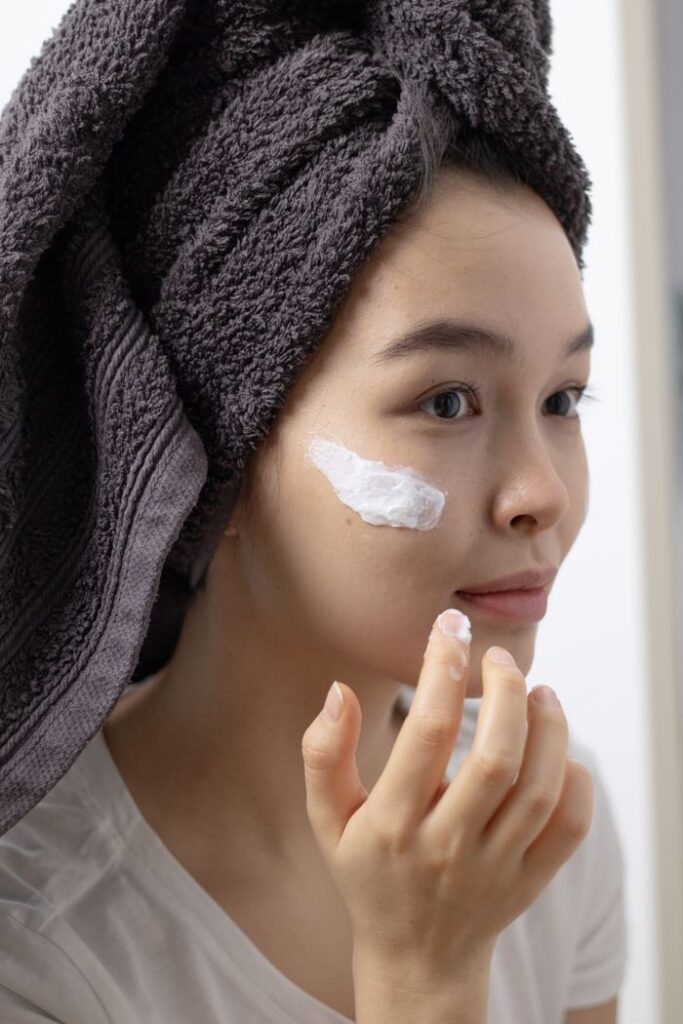
Not every new bump after switching sunscreens means the product is wrong for you.
Purging happens when active ingredients speed up cell turnover and push existing clogs to the surface faster.
True breakouts, on the other hand, come from new congestion the product itself is causing.
A few clues help you tell the two apart with reasonable confidence.
- Purging clears within four to six weeks and shows up where you normally break out.
- True breakouts appear in new spots you rarely had trouble with before.
- Purging tends to shed faster than usual, while breakouts linger and multiply.
- True breakouts often come with itching, tightness, or a greasy film on the skin.
If bumps keep spreading past six weeks, the sunscreen itself is the more likely culprit.
At that point, switching to a lighter or mineral-based formula usually settles things down quickly.
Does Tinted Sunscreen Cause Acne
Tinted sunscreens add pigments, usually iron oxides, on top of the base sunscreen formula.
These pigments protect against visible light, which plain sunscreen filters do not fully block.
On their own, iron oxides are not considered comedogenic and rarely clog pores by themselves.
The added breakout risk in tinted sunscreens usually comes from the base formula, not the tint.
Many tinted sunscreens lean heavier to fully cover the pigment, which can feel thicker on skin.
That thicker base, not the color itself, is what sometimes triggers breakouts in sensitive skin.
Choosing a tinted, mineral-based sunscreen built on a light base avoids this problem almost entirely.
Mineral vs Chemical Sunscreen for Acne-Prone Skin
Between the two main formulation types, mineral sunscreen generally wins for acne-prone skin.
It sits on the surface, causes less irritation, and rarely interacts badly with active breakouts.
Chemical sunscreen can still work well, but it demands a lighter, more careful formula.
The heat-and-absorb mechanism behind chemical filters is what raises the risk for reactive or oily skin.
If your skin reacts easily to new products, start with mineral and adjust from there.
If mineral formulas feel too thick or leave a white cast you dislike, a light chemical gel can work just as well.
How to Choose Sunscreen for Acne-Prone Skin
Picking the right sunscreen comes down to a handful of practical checks before you buy.
Texture matters more than most people realize when it comes to daily wear on acne-prone skin.
A few criteria make the search much faster and far less frustrating.
- Choose a gel, fluid, or lotion texture over thick creams or balms.
- Look for a matte or satin finish rather than a dewy, glossy one.
- Check for “oil-free” and “non-comedogenic” claims, though labels alone are not proof.
- Favor fragrance-free versions, since fragrance is a common trigger for irritation.
- Test a small amount on your jaw for three days before applying it to your whole face.
Labels help narrow the field, but the ingredient list underneath them tells the real story.
Ingredients to Look for in Non-Comedogenic Sunscreen
Certain ingredients show up again and again in sunscreens that acne-prone skin tolerates well.
Learning to spot them turns label reading from a guessing game into a quick habit.
- Zinc oxide and titanium dioxide, the two main mineral UV filters.
- Niacinamide, which calms inflammation and helps regulate oil production.
- Hyaluronic acid, a lightweight hydrator that will not clog pores.
- Squalane, an oil-free moisturizer many acne-safe formulas rely on.
- Dimethicone in small amounts, since light silicone gel bases rarely cause trouble.
On the flip side, coconut oil, lanolin, cocoa butter, and wheat germ oil deserve a second look.
These ingredients show up on nearly every dermatologist’s list of common pore-clogging offenders.
How to Apply Sunscreen on Acne-Prone Skin Without Breakouts
Even the best sunscreen formula can cause trouble if it’s applied the wrong way.
Amount matters first, since too little leaves skin unprotected and too much can feel suffocating.
Most faces need about a quarter teaspoon, roughly a nickel-sized amount, to reach proper coverage.
Layering order also plays a role in how the skin handles the product.
Apply sunscreen as the last step, after any lightweight serums have fully absorbed into the skin.
Reapplication matters just as much as the first application, especially during long hours outdoors.
- Reapply every two hours if you’re outside in direct sun for extended periods.
- Blot excess oil with a tissue before reapplying, rather than layering onto a greasy face.
- Wash sunscreen off thoroughly at night using a proper cleanser, not just water.
- Avoid rubbing sunscreen in aggressively, since friction can irritate already inflamed skin.
Leftover sunscreen sitting on the skin overnight is one of the most overlooked breakout triggers.
Building a Sunscreen Routine That Protects Skin Without Triggering Breakouts
The full picture comes down to three factors working together, not any single one alone.
Formulation decides whether a sunscreen sits lightly on the skin or seals it under a heavy film.
Ingredients decide whether that formula feeds bacteria, feeds yeast, or simply hydrates without causing harm.
Application decides whether even a well-made sunscreen ends up trapped against the skin all day.
Get all three right, and sunscreen becomes one of the easiest ways to protect acne-prone skin.
Get any one wrong, and even a good formula can start causing the very problem you feared.
Sunscreen was never the enemy here; it was always about matching the right formula to your skin.
FAQS
Can I skip sunscreen on cloudy or rainy days?
No, UV rays pass through clouds and still trigger inflammation and dark marks on acne-prone skin. Daily application matters regardless of visible sunlight.
Does a higher SPF mean a heavier, more clogging formula?
Not necessarily, since the SPF number reflects UV protection level, not texture or ingredients. Many high-SPF gel formulas stay lightweight and non-comedogenic.
Can sunscreen make active acne look worse temporarily?
Yes, a thicker formula sitting over inflamed skin can trap oil and make breakouts look more prominent for a few days. Switching to a lighter texture usually resolves this quickly.
Is it safe to layer sunscreen over acne treatments like benzoyl peroxide?
Yes, apply the treatment first, let it absorb fully, then follow with sunscreen as the last step. This order keeps both products working without interfering with each other.
Does waterproof sunscreen cause more breakouts than regular sunscreen?
Often yes, since waterproof formulas rely on heavier, more occlusive ingredients to resist water. A water-resistant, lightweight gel formula is usually the safer choice for acne-prone skin.
Can switching sunscreens too often make acne worse?
Yes, constantly switching doesn’t give skin enough time to adjust or show true reactions. Sticking with one formula for at least four to six weeks gives clearer results.