
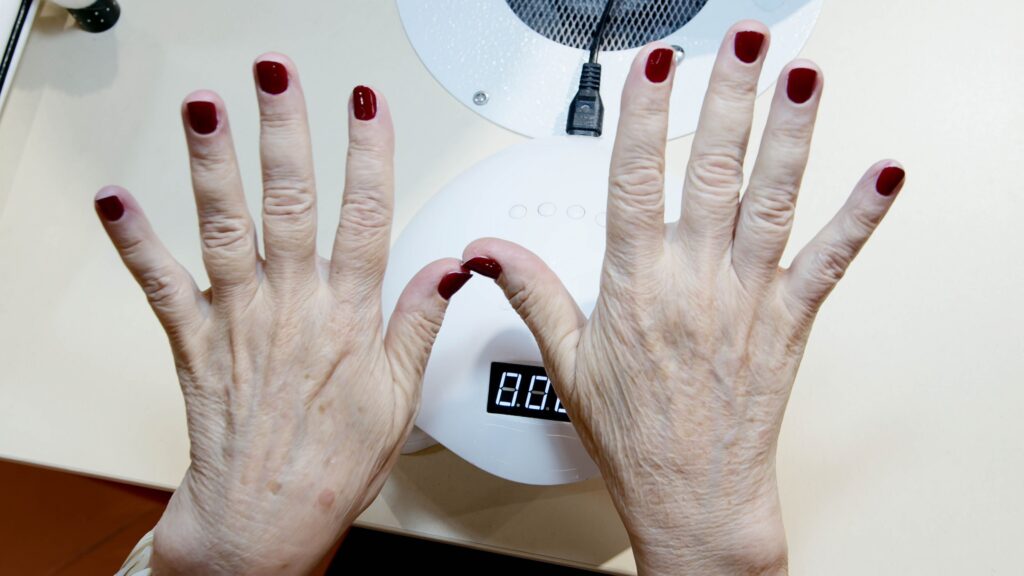
Sometimes hands don’t dry out suddenly, but this change occurs gradually. First, the skin loses its softness; then roughness becomes apparent, and if timely care is not taken, more obvious signs appear.
Some people’s hands only appear dry, while others also develop whiteness, fine cracks, or peeling. All these signs indicate that the skin is lacking moisture.
If you want to know what dry hands usually look like, it is important to understand these signs. Recognizing them in time can help in better skin care and the prevention of dryness.
Let’s now look at the common signs, one by one, that help recognize dry hands. First, congratulations to you!! You already understand your skin type because it’s the first step moving forward.
What Does Dry Hands Look Like? 3 Stages Of Dry Hands
Most sources only tell you common symptoms of dry hands, but here in this content, we will dig deeper. We will understand what a dry hand looks like, whether it’s just starting or a severe case.
You must have heard about eczema. Now it has become very important to know what dry hands look like at the early and late stages, so that you can treat them in time and prevent them from becoming a serious illness.
Early Signs of Dry Hands
Just like you, I thought dry hands meant the skin became a little rough, but in reality, hands don’t suddenly become dry; they start showing small, early signs. So, the question is: what early changes do you notice when your hands start to dry out?
The first thing that happens is your skin starts losing its natural softness and glow, and you notice your hands don’t feel as soft and smooth as they used to.
Then the second thing is that your hands start to feel tight and stretched, especially after washing them. As time goes on, the outer layer of your skin begins to dry out, and small white lines start to appear on your skin’s surface.
Some people may also experience itching and irritation, especially if they have sensitive skin or wash their skin frequently. If it’s left untreated at this stage, the skin’s surface becomes weaker.
After that, hand skin dryness is no longer limited to just rough skin; small cracks also begin to appear on your hands.
What Does Dry Hands Look Like in the Early Stage?
Symptoms of Moderate Dry Hand
When the early stage starts, and you don’t take any action, such as applying hand cream or lotion. All the signs seen in the early stage become more obvious and severe. In the early stage, the slight hand dryness has now also become easily visible.
Your hand skin starts to feel rougher, tighter, and more lifeless than before. The main reason is that the skin continues to lose its natural moisture, and its protective layer, also called the skin barrier, weakens.
According to Acibadem, when the protective layer of our skin is compromised by an improper skincare routine, environmental factors, and internal factors, it can’t retain moisture. This leads to uneven and rough hand skin.
Especially if your skin is sensitive, the symptoms may increase more rapidly at this stage than in people with normal skin.
And sometimes it happens that the dryness on the backs of the hands or finger joints becomes so pronounced that not only white dryness but fine flakes appear.
in addition, the skin may feel tight when you bend your hand, and small cracks may also begin to form in some areas.
In this Reddit post, I found that some people experience a burning or stinging sensation after using soap, sanitizer, dishwashing liquid, or other chemicals because their skin is weakened and can no longer provide the same protection against these substances.
Some people may also experience mild redness or inflammation, especially in cold weather or after frequent hand washing.
The mid-stage of hand dryness is the situation where, if you do not take any action, it leads to severe dryness, and at which point you must consult your dermatologist.
Severely Dry Hands
When dry hands reach this third stage, it doesn’t just mean the skin is dry; it means the skin has already been severely damaged, and you need to take action now.
At this stage, the skin’s protective layer, as discussed above, is nearly compromised. As a result, it is unable to retain moisture and cannot effectively defend itself against external germs, chemicals, and allergens.
As a result, your hand skin gets the last stage of dryness and roughness. At this stage, deep cracks form on the skin, especially around the joints of the fingers, the palm lines, and the nails.
These cracks are not only an external problem but can also be quite painful.
Sometimes they become so deep that blood or watery fluid begins to ooze from them, increasing the risk of wound formation and infection.
Since your hand skin becomes so sensitive, even washing your hands, getting water on them, using soap, or holding something tightly can cause severe pain, burning, or stinging.
The constant dryness and itching can cause small blisters to form on some people’s skin, while the skin becomes thick and hard and begins to peel off to a deep level.
If the skin is repeatedly injured or germs enter the cracks from scratching, deep, scabbed sores, swelling, severe redness, and infection can also develop.
If a person already has eczema, psoriasis, diabetes, or any other condition that affects the skin’s health or its ability to heal, this stage can worsen more quickly, and symptoms can be more severe.
Trust me, this is the stage where regular moisturizers usually don’t work. If you have deep cracks in your hands that are bleeding or oozing, severe pain, blisters, or signs of infection, consult a dermatologist immediately.
Dry Hands vs Normal Hands
| Dry Hands | Healthy Hands |
| Skin feels rough, hard, and dry. | Skin feels soft, smooth, and well-moisturized. |
| Redness or an ashy appearance may be visible. | Skin maintains its natural, healthy color. |
| Fine lines may become more pronounced, and deep cracks or fissures can develop. | Skin appears even and smooth, with no deep lines or cracks. |
| Itching, pain, or soreness may occur. | There is usually no itching, pain, or discomfort. |
| The skin may peel, flake, or develop small cracks. | The skin remains intact without peeling, flaking, or cracks. |
Common Causes of Dry Hands
Dry hands can have many different reasons. Sometimes it’s just cold or dry weather, while in some people, frequent handwashing, hot water, harsh soaps, sanitizers, detergents, or other chemicals strip the skin of its natural moisture.
Additionally, diabetes, eczema, thyroid disorders, aging, or dehydration can also cause this problem. And sometimes, your hands are still dry, even if you are using moisturizer. Here’s why this happens. Before you go to the solution, you must understand why your hands are dry so you can take action at an early stage, before it becomes a severe condition.
How to Check if Your Hands Are Dry: Practical Methods?
- Look at the skin of your hands carefully. If the skin has white or gray rough patches, dry flakes or cracks, this is a clear sign of dryness.
- Gently touch your hands to see if the skin feels tight or tight. Dry skin has a slight roughness and hardness.
- Test your hands after washing them. If the skin remains tight or feels cold even after hot water, this indicates dryness.
- See the difference before and after applying moisturizer to your hands. If the skin does not heal even with a little moisture, or irritation persists, it means that the skin is very dry.
- Generally, dry skin is characterized by tightness, roughness, and flaking. If these symptoms appear, your hands are dry.
How to Treat Dry Hands? When Should You See a Doctor?
Dry hands can be managed by taking good care of them and keeping them moisturized. Here are some effective steps:
- Apply a good moisturizer or petroleum jelly immediately after each hand wash to help retain moisture.
- If you wash your hands several times a day, try to reapply moisturizer each time.
- Wear rubber or cotton gloves when working with water, detergents, or chemicals to help preserve your skin’s natural oils.
- Use lukewarm water instead of hot water to wash your hands, as very hot water can further dry out your skin.
- Use a mild, fragrance-free soap to minimize the impact on your skin.
- Apply moisturizer immediately after washing your hands if any moisture remains on your skin, as this will help retain moisture.
- If the air in your home is very dry, use a humidifier to reduce skin dryness.
- Apply a thick layer of moisturizer or Vaseline before bed, and, if possible, wear cotton gloves to help keep the moisture in all night.
- If the dryness is severe, creams containing urea or lactic acid can be used on the advice of a doctor.
- If there is inflammation or severe itching in the hands, the doctor may prescribe hydrocortisone cream.
- If the dryness does not go away despite home care, or if deep cracks, blood, discharge, severe pain, or signs of infection appear, be sure to consult a dermatologist.