
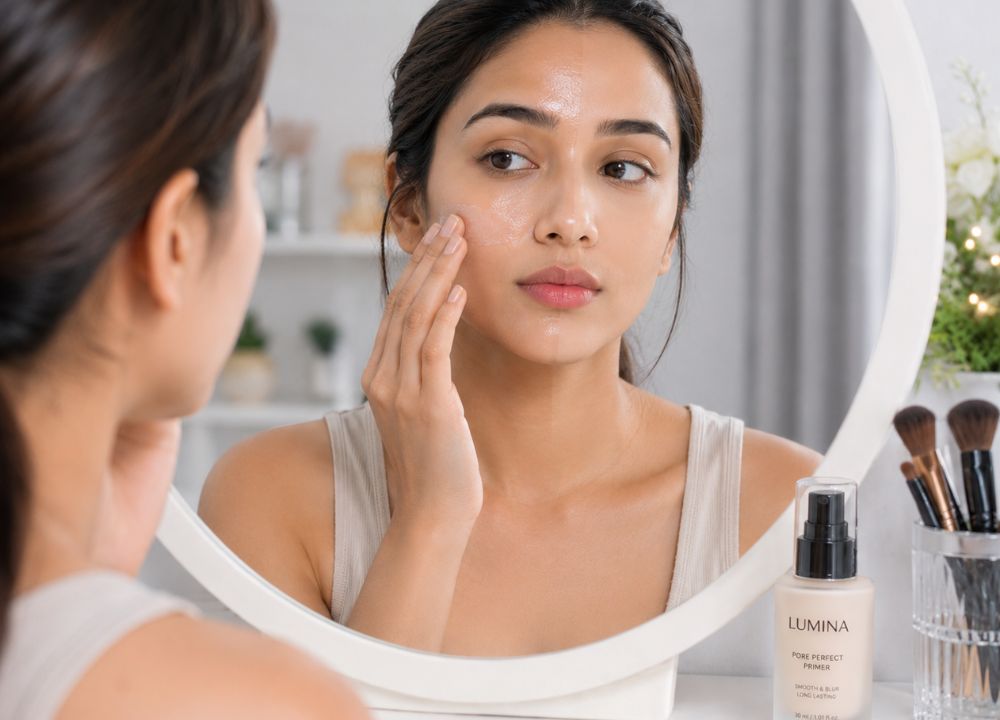
Oily skin and makeup have a complicated relationship. You spend time getting ready, and within a few hours, your foundation is sliding off, and your face looks greasy.
The root cause is excess sebum. When sebum overproduces, it can cause makeup to slide off or look patchy, making application difficult. And if you keep skipping the right base step, it only gets worse over time.
A good primer sits between your skin and makeup. It controls oil, smooths your skin, and helps everything stay in place much longer than it would without one.
Even the best oil control primer won’t work if you’re not applying it correctly, and prep work starts before you even open the tube. So knowing what to use and how to use it really does make a difference.
This guide covers everything, from picking the right type to applying it the right way, so your makeup actually lasts all day.
- What Is a Primer and Why Does It Matter for Oily Skin?
- What Type of Primer Is Best for Oily Skin?
- What Is the Best Primer for Oily Skin?
- What Is a Good Primer for Oily Acne Prone Skin?
- How to Choose a Primer for Oily Skin?
- How to Apply Primer for Oily Skin?
- What Can I Use Instead of Primer for Oily Skin?
- FAQS
What Is a Primer and Why Does It Matter for Oily Skin?
A primer is a lightweight product you apply before foundation. It creates a smooth base so your makeup goes on evenly and stays put longer.
For oily skin, a regular primer is not enough. You need one that actively controls shine and keeps oil from breaking through your foundation.
Is Primer Good for Oily Skin
Yes, primer is genuinely helpful for oily skin. It creates a barrier between your skin and your makeup, reducing how quickly oil breaks everything down.
The right primer can keep shine at bay without the drying effect of powder, which is a big win for oily skin types. It also helps your foundation grip better, so it does not slide off by midday.
Does Primer Help Oily Skin
Primer helps by giving your skin a controlled surface before makeup. Without it, oil mixes directly with your foundation, and things fall apart faster.
Think of it as a base coat. It does not fix oily skin permanently, but it slows down how quickly oil shows up on the surface.
Does Primer Prevent Oily Skin
Primer does not stop your skin from producing oil. It just manages how much of that oil reaches your makeup.
Over time, using the right primer alongside a good skincare routine helps your skin look more balanced throughout the day.
Does Primer Make Skin Oily
The wrong primer can. If you use a hydrating or dewy primer on oily skin, it can add to the shine instead of reducing it.
That is why choosing the right type matters. A mattifying primer pulls excess oil in, while a hydrating one adds more moisture than oily skin needs.
Do You Need Primer If You Have Oily Skin
You do not absolutely need primer, but it makes a big difference. Without it, makeup on oily skin tends to fade, crease, and look shiny much faster.
Primer can even be worn as a final step in your skincare routine just to enhance your complexion, making it a worthy product for even non-makeup wearers. So yes, it is worth using.
What Type of Primer Is Best for Oily Skin?
Not all primers are made the same. The formula matters a lot, especially when your skin tends to produce extra oil.
Knowing what each type does helps you pick the one that actually works for your skin instead of guessing.
Is Silicone-Based Primer Good for Oily Skin
Silicone-based primers are very popular for oily skin. Silicones like dimethicone and cyclomethicone form an occlusive barrier on the surface of the skin, which helps lock in hydration while creating a smooth base.
They fill in pores and create a blurred effect. However, if you are acne-prone, check the ingredients first, as some silicone formulas can clog pores over time.
Is Gel-Based Primer Good for Oily Skin
Gel-based primers feel light on the skin and absorb quickly. They work well for oily skin because they do not add extra weight or greasiness.
Many gel primers also include oil-absorbing ingredients like niacinamide or salicylic acid. This makes them a solid choice if you want something that is lightweight and still keeps shine under control.
Is Water-Based Primer Good for Oily Skin
Water-based primers are a safe bet for oily skin. They are light, non-greasy, and less likely to clog pores compared to heavier formulas.
They also layer well under most foundations. If your skin is oily and sensitive at the same time, water based is usually the easiest option to start with.
Is Hydrating Primer Good for Oily Skin
Hydrating primers are made for dry skin, so they are usually not the best fit for oily skin. They add moisture and a dewy finish, which can make oily skin look even shinier.
That said, if your skin is combination or oily only in certain areas, you can use a hydrating primer just on the drier parts. Avoid applying it all over.
Is Matte Primer Good for Oily Skin
Matte primers are one of the best options for oily skin. A mattifying primer absorbs oil and refines the look of pores, keeping your base smooth and matte from morning to night.
They usually contain ingredients like silica or kaolin clay that soak up oil throughout the day. If your skin gets shiny fast, a matte primer is probably your best option.
What Is the Best Primer for Oily Skin?
The best primer for oily skin is one that controls shine, does not clog pores, and keeps your foundation in place. There is no single answer because it also depends on how oily your skin is and whether you have other concerns like acne or large pores.
When choosing the right face primer, the best primer for oily skin is generally a mattifying or silicone-based primer to control shine and blur pores. Start with those as your baseline.
What Is the Best Primer for Very Oily Skin?
If your skin gets extremely oily fast, you need a primer with strong oil control. Look for ones with kaolin clay, silica, or dimethicone, as these work harder to absorb oil.
A primer that keeps makeup intact after 7 hours without looking like a greasy mess is ideal for very oily skin. Test a few on your T-zone first to see which one actually holds up.
What Is the Best Drugstore Primer for Oily Skin?
Drugstore primers have come a long way. L’Oreal primers tend to stand out when it comes to drugstore options vetted by dermatology providers. They work well for oily skin without the high price tag.
Look for labels that say “oil-free,” “mattifying,” or “pore-minimizing” on the drugstore shelf. These are the keywords that tell you the formula is built for oily skin.
What Is the Best Matte Primer for Oily Skin?
A good matte primer should keep you shine-free for at least six to eight hours. Check for ingredients like silica, clay, or niacinamide, since these are the ones doing the heavy lifting.
Avoid matte primers that feel too heavy or thick on application. A lightweight matte formula will control oil without making your skin feel suffocated or cakey.
What Is the Best Tinted Primer for Oily Skin?
A tinted primer adds light coverage while also priming your skin. For oily skin, make sure the tinted formula is also mattifying; you are adding coverage without controlling oil.
Tinted primers work best if you want to skip foundation on lighter days. They even out skin tone and reduce shine at the same time, which is a nice two-in-one benefit.
What Is the Best Primer for Oily Acne Prone Skin?
If your skin is both oily and acne-prone, look for a non-comedogenic primer with soothing ingredients. Ingredients like aloe vera, green tea extract, and centella asiatica help soothe irritated skin while managing oil without clogging pores.
Avoid primers with heavy silicones or fragrance if your skin breaks out easily. A gentle, oil-free formula is always the safer starting point.
What Is a Good Primer for Oily Acne Prone Skin?
Oily skin and acne-prone skin often go hand in hand. Excess sebum can mix with dead skin cells and bacteria, which can clog pores and lead to breakouts. So the primer you choose needs to do more than just control shine.
A good primer for acne-prone skin should be labeled noncomedogenic, fragrance-free, and oil-free. These three things together lower your chances of triggering a breakout.
Which Primer Is Best for Oily and Acne-Prone Skin
Look for primers that include salicylic acid or niacinamide, as both help manage oil and calm active breakouts. Clay-based primers also work well since they absorb excess sebum without irritating inflamed skin.
Clay ingredients work overtime to soak up excess oil without feeling heavy or cakey, and dermatologists often recommend them because they are gentle enough for daily use. That combination of effectiveness and gentleness is what you want.
How to Choose a Primer for Oily Skin?
Start by looking at your skin concerns. Is your main issue shine, large pores, breakouts, or all three? Your answer will guide which formula makes the most sense.
Always check the ingredient list. Words like silica, kaolin, dimethicone, niacinamide, or salicylic acid are signs that the primer is made to manage oil and keep skin looking smooth.
Also, check if the formula is non-comedogenic, especially if your skin breaks out often. A primer that controls oil but clogs your pores is not doing you any favors.
How to Apply Primer for Oily Skin?
Start with a clean, moisturized face. Even oily skin needs moisture, because skipping it can actually push your skin to produce more oil to compensate.
Apply a pea-sized amount of primer and press it into your skin gently. Pressing motions rather than rubbing work better, as they help the primer sit smoothly on the skin instead of dragging it around.
Wait about one to two minutes before applying foundation. This short wait lets the primer set properly so your makeup grips better and lasts longer.
What Can I Use Instead of Primer for Oily Skin?
If you do not have a primer, a mattifying moisturizer can work as a substitute. It hydrates your skin while giving it a smoother, less greasy surface before makeup.
Setting spray with oil control properties is another option. Some people also use a light layer of translucent powder as a base, though it does not give the same smooth finish as a real primer.
These alternatives are not perfect, but they can help in a pinch. If you use them regularly, just know that your makeup may not last quite as long.
FAQS
Does primer actually make a difference for oily skin?
Yes, it really does. It gives your makeup something to grip onto so it does not slide off. Without it, oily skin tends to break down makeup much faster.
Can I use primer without foundation?
Yes, you can. Primer alone gives your skin a smoother, more even look and helps control shine even without any makeup on top.
How much primer should I apply?
A small, pea-sized amount is enough for the whole face. Applying too much can make your skin look cakey or cause your foundation to pill.
Should I moisturize before applying primer?
Yes, always moisturize first. Skipping moisturizer can make your skin produce more oil, which is the opposite of what you want.
How long does primer last on oily skin?
A good mattifying primer can last anywhere from six to eight hours on oily skin. Using a setting spray on top can help extend that even further.